
Reviewed · REINA SOFIA MUSEUM TOURS
Madrid: Reina Sofía Museum Private Guided Tour
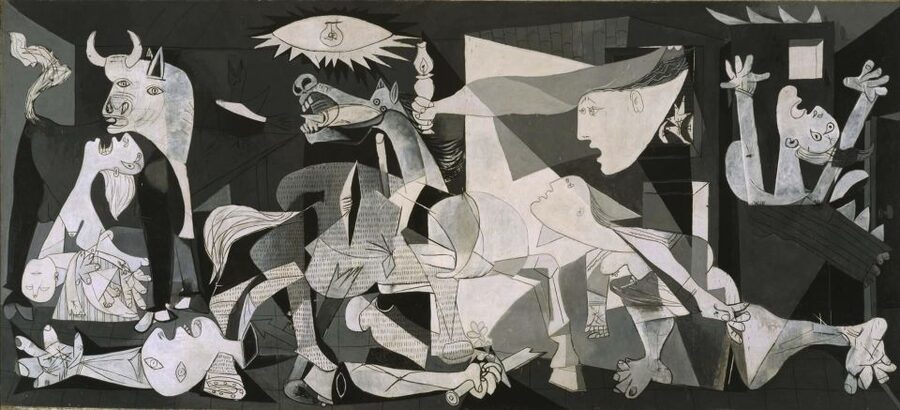
Picasso’s Guernica is the main event, but it makes more sense when you know the story around it. On this private Reina Sofía tour, your guide can connect the painting to the 1937 Paris Expo, the bombing of Guernica, and the Spanish history behind the work.
I like two things here: the guide can tailor the route to your interests, and a group of up to seven keeps the visit personal. One consideration: two hours is enough for a strong introduction, not a full look at the museum, so plan to stay afterward if you want more time.
Key points
- Guernica with context: Explore the painting alongside its history, including its creation for the 1937 Paris Expo.
- A genuinely small private group: The tour is for no more than seven people, giving you room to ask questions and set the pace.
- More than famous paintings: Expect discussion of photography, film, sculpture, and propaganda posters as well as paintings.
- A route shaped around you: Tell the guide what interests you, from individual artists to the links between works.
- Two hours, with an option to continue: You can remain in the museum after the tour if your group has seven or fewer people.
Meeting at the Nouvel building
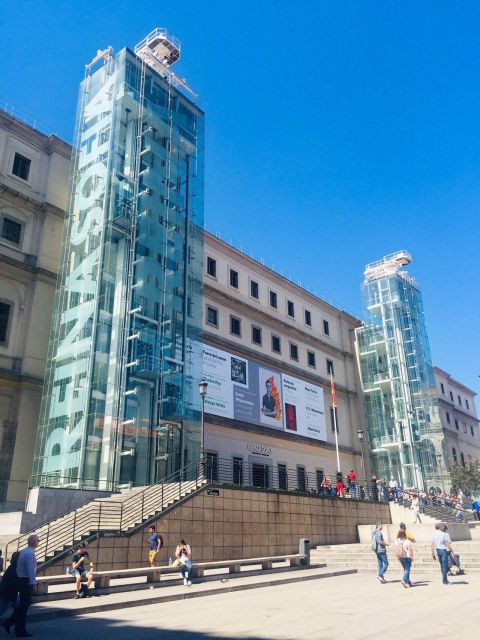
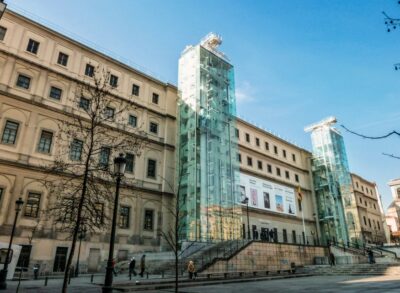
Your guide meets you at the selected time by the statue in front of the Nouvel building. The exact meeting point can vary by the option booked, so check your confirmation before setting out rather than relying on a generic map pin.
The meeting area is part of Madrid’s UNESCO-listed historic setting, known as the Landscape of Light. The tour description connects this area to the city’s development under Carlos III, which gives you a little context before you turn to the art inside.
From there, the guide takes you into the Reina Sofía and helps you bypass the entrance queue. That can be useful on a short visit: you spend less of your two hours waiting and more of it with the collection. It does not mean you will see every room, though. The museum spans art from 1881 to the present, and a guided route necessarily makes choices.
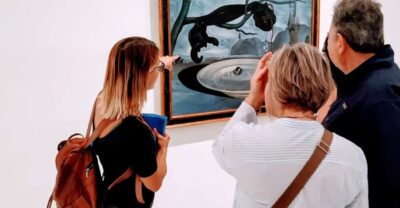
The tour is private, with a maximum group size of seven. That distinction matters. You are not joining a large group trying to keep up with a guide’s voice from across a gallery. You can ask questions, pause over a work, or tell the guide what you would rather focus on.
More Reina Sofia tours around Madrid:
- Madrid: Reina Sofía Museum Entrance Ticket
★ 4.5 · 6,889 reviews - Madrid: Reina Sofía Museum Guided Tour
★ 4.3 · 659 reviews - Spanish Civil War start of 2 World War, Guernica Franco
★ 5.0 · 462 reviews
Why Guernica deserves time
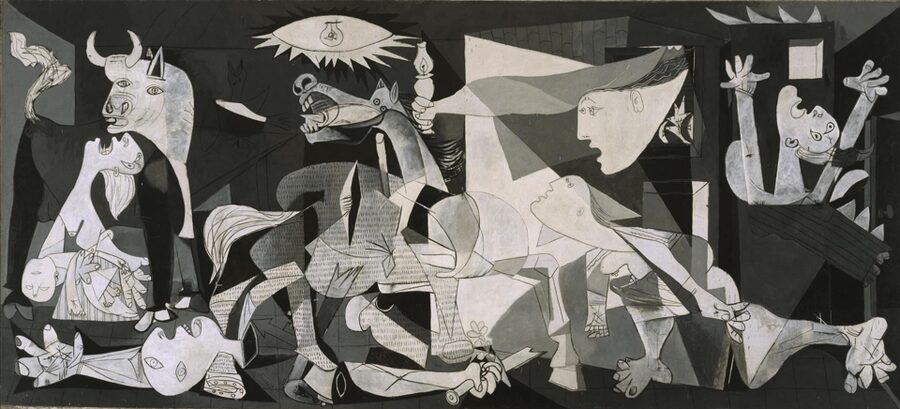
The most important stop is likely Picasso’s Guernica, one of the museum’s best-known works and a painting with an unusually direct link to the events that shaped it. A guide can help you look beyond its size and stark forms to understand why Picasso made it and what it came to represent.
A particularly useful way to approach the painting is through its history. Sofia, one of the guides who has led this tour, has explained how Picasso created Guernica for the 1937 Paris Expo, in the aftermath of the bombing of the Basque town. The surrounding material discussed on the tour has included photographs of Picasso at work and the invoice for his payment from the Spanish government. Those details make the painting feel less like a grand museum object and more like a work made in response to a specific political moment.
You will get more from this stop if you let the guide set the scene before trying to interpret every figure. The painting is crowded with forms and strong reactions, and a little background can help you see how its visual choices connect to war and public memory. Then you can decide what you make of it yourself.
Guernica also shows why a guided visit can be worth paying for. The painting is famous enough to draw attention on its own, but a guide can give you a framework for seeing it and point out connections you might otherwise miss. Still, no tour can settle every question about a work this complex. Treat the guide’s explanation as a useful starting point, not a final answer.
Picasso, Dalí, and Miró in context
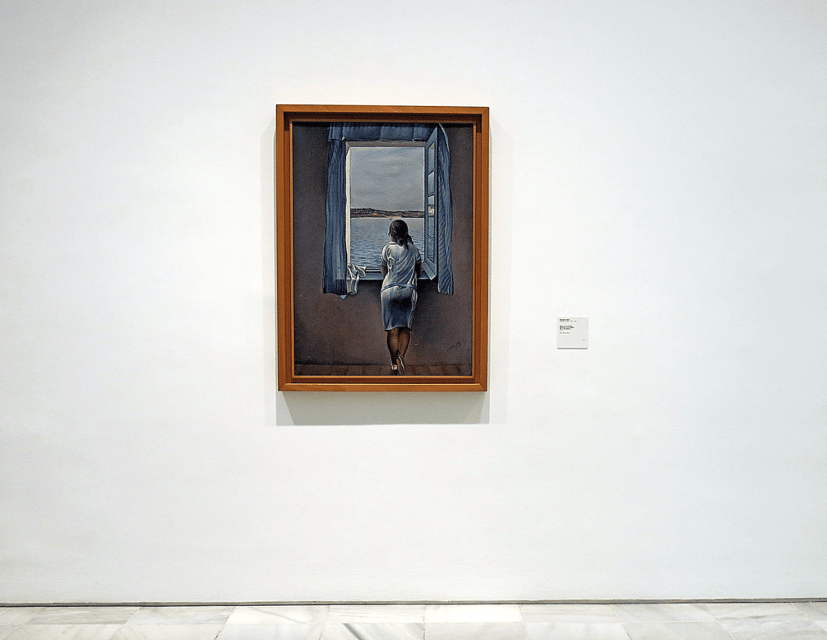
The Reina Sofía’s collection covers the evolution of modern and contemporary art from the late nineteenth century onward. Picasso, Salvador Dalí, and Joan Miró are central names, but the value of the tour is not simply ticking off three famous artists. Your guide can explain what each artist was responding to and how their work fits into a broader change in European art.
That context helps if you know the names but not the movements. Cubism, for example, can be difficult to make sense of when you encounter a single painting without explanation. Sofia has used clear explanations of cubism and Spanish history to connect artistic choices with the period in which they were made.
You can also ask the guide to focus on the questions that matter to you. Perhaps you are curious about how an artist developed a style, why a particular work caused a stir, or how Spanish events shaped the art. The tour is designed to adapt to your interests, so say what you want to explore rather than waiting for the guide to guess.
A useful guide does more than name a painter and a date. Amanda has been described as engaging and enthusiastic, while Martín has been noted for a friendly manner and strong command of art. Those individual qualities can make a difference in a museum, where a clear explanation and an inviting tone help you feel comfortable asking questions. Your guide will depend on the date and assignment, so do not book expecting a particular person.
Looking beyond paintings
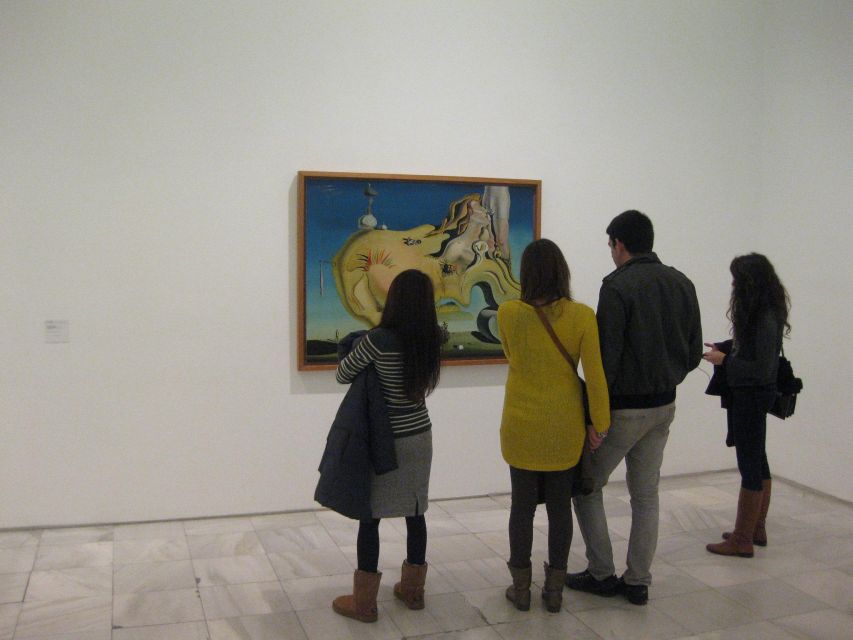
One of the tour’s strengths is its broader view of what counts as modern art. The collection includes photographs, propaganda posters, film clips, and sculpture as well as paintings. That variety helps you see how artists used different forms to respond to their time, rather than treating the museum as a parade of canvases.
The guide may also connect works that sit in separate rooms. Sofia, for example, has linked paintings of intellectuals meeting by a male artist and a female artist. It is the sort of comparison that can be easy to miss when you wander alone, especially if you do not know the collection or its layout.
The tour also makes a point of including women artists. That is worth asking about if you want a fuller account of modern art than a familiar sequence of celebrated men. You can tell your guide this is a priority, or ask how a particular woman artist’s work relates to the pieces around it.
A guided route cannot cover every artist or medium in depth. If you have a specific work or movement you want to see, mention it early. The more clearly you describe your interests, the easier it is for the guide to shape the two hours around them.
More museum tours around Madrid:
- Madrid: Prado Museum Entry Ticket
★ 4.6 · 17,509 reviews - Madrid: Small Group of Prado Museum Tour & Optional Tapas
★ 4.6 · 2,437 reviews - Madrid: Prado Museum Guided Tour with Skip-the-Line Ticket
★ 4.5 · 2,018 reviews - Madrid: Museum of Illusions Ticket
★ 4.1 · 1,909 reviews
Keeping the visit personal
The private format is most useful when you want room to talk. You can ask for more detail, request a slower pace, or steer the conversation toward a subject that interests you. The guide is there to lead, but the visit is not meant to feel like a lecture you have to sit through without interruption.
That flexibility can help different kinds of art lovers. If you already know the major artists, you can ask about relationships between works or the historical context behind them. If you are new to modern art, ask for plain explanations of styles and techniques. You do not need to arrive with specialist knowledge to get something from the visit.
The group limit is seven, which keeps the experience intimate without making it a one-to-one lesson. If you are booking with family or friends, the private arrangement also means you can share the visit with your own group rather than being matched with strangers.
There is one practical point worth keeping in mind: a guide’s style matters. The strongest version of this experience depends on someone who explains clearly, responds to questions, and gives you enough space around the art. One past participant raised a concern about a guide being visibly unwell and standing very close without a mask or headphones. That is an isolated account, but it is a reminder that close contact is part of a small-group tour. If you have a concern on the day, speak up.
Is two hours enough?
Two hours gives you a focused introduction to the museum, not a complete visit. That is a sensible trade if you want help understanding the major works and their context. It is less suitable if your goal is to see the whole collection at your own pace in one sitting.
The good news is that groups of seven or fewer can remain inside after the guided portion. You can use the guide’s recommendations to continue on your own, revisit a work that caught your attention, or explore parts of the collection the route did not cover. This is one of the tour’s best practical features, so avoid scheduling another activity immediately afterward if you think you will want extra time.
The guided portion can also help you make better use of that independent time. Once you have a sense of the artists and themes, it is easier to choose what you want to see next rather than wandering without a plan. Ask your guide for suggestions before the tour ends.
What the $136 price buys
At $136 per person, this is a premium museum visit. The price includes the specialized guide, admission, and the tour’s fees. You are paying not only for entry but for a private, tailored explanation and a group capped at seven.
That value depends on how you like to visit museums. If you are content to look at works on your own and read the labels, a standard visit may suit you better. If you want to understand why Guernica matters, connect artists to Spanish history, and ask questions as you go, the added cost has a clear purpose.
The skip-the-ticket-line access is another practical benefit, particularly when your time in Madrid is tight. It removes one potential delay at the entrance, though it does not turn a two-hour tour into a full museum day. Think of it as a focused introduction with the option to continue, not an all-inclusive survey of every room.
Who should book this tour
I would consider this tour if you are especially interested in Picasso, Dalí, Miró, or the history behind modern Spanish art. It also suits anyone who finds museums easier to enjoy with a guide who can explain the ideas and connections behind the works.
It is a good fit for a small group that wants to talk and ask questions, rather than follow a large, fixed-route tour. The option to stay afterward makes it more useful if you want both a guided overview and time to look around independently.
I would skip it if you prefer complete freedom to choose every room, or if $136 per person feels too high for a two-hour introduction. The museum itself offers plenty to explore, and you may prefer to visit without a guide. But if context is what helps art come alive for you, this private tour offers a focused way into the Reina Sofía.
FAQ
How long is the Reina Sofía private tour?
The guided tour lasts two hours. If your group has seven people or fewer, you can stay in the museum afterward to explore on your own.
What is the group size?
It is a private group of no more than seven people.
Which languages are available?
The live guide is available in English or Spanish.
What does the price include?
The price includes an art-specialist guide, entrance fees, taxes, and management fees.
Does the tour skip the entrance line?
Yes. The activity includes skip-the-ticket-line access at the museum entrance.
Where does the guide meet the group?
The meeting point may vary by the option booked. The described meeting place is by the statue in front of the Nouvel building, so check the details for your selected option.
Can I stay in the museum after the guided visit?
Yes, if your group has seven people or fewer. You can continue exploring independently, and the guide can recommend what to see.
Is the museum accessible to wheelchair users and strollers?
Yes. The museum is wheelchair and stroller accessible.
Can I cancel for a refund?
Yes. You can cancel up to 24 hours in advance for a full refund.
More private tours around Madrid
- Madrid Welcome Tour with Local Guide in Eco Tuk Tuk Private
★ 5.0 · 2,936 reviews - Madrid: Private City Tour by Eco Tuk Tuk
★ 4.9 · 2,876 reviews - Madrid Historical Tour with Local Guide in Eco Tuk Tuk Private
★ 5.0 · 876 reviews - Toledo Private Tour with Licensed Guide and Driver from Madrid
★ 5.0 · 637 reviews
Just added in Madrid
- Prado and Reina Sofia Museums Private Tour★ 5.0 · 6 reviews
- Prado Museum and Royal Palace Private Tour★ 5.0 · 18 reviews
- Prado Museum VIP Tour with Drinks & Tapas★ 5.0 · 4 reviews
- Prado Museum and Royal Palace Private Tour in Madrid★ 5.0 · 3 reviews
- Prado Museum Private Tour★ 5.0 · 62 reviews
- Prado Museum and Reina Sofia Museum Private Tour★ 4.5 · 6 reviews
- Visita privada al Museo del Prado★ 5.0 · 34 reviews
- Prado Museum Private Tour with Tickets Included★ 5.0 · 3 reviews
Reina Sofia Museum Tours, compared.
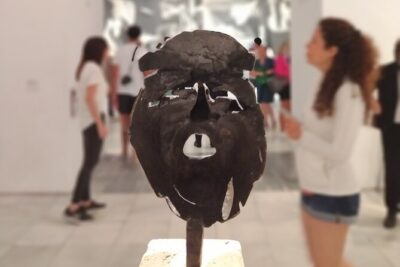
Reina Sofia Museum Small Group Tour -6 people maximum-
Read our review →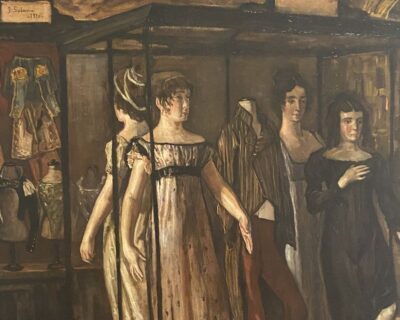
Guided Tour of Reina Sofía Museum with Entry Ticket
Read our review →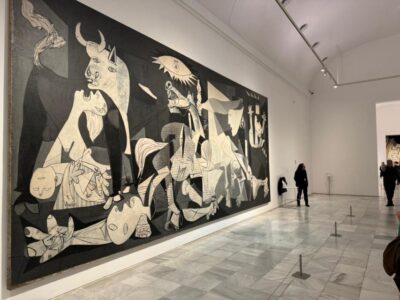
Reina Sofia and Prado Museum Tickets and Guided Tour
Read our review →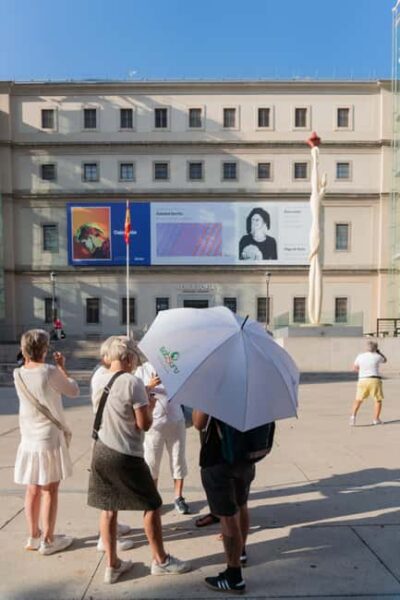
Reina Sofía Guided Tour with Skip-the-Line Tickets
Read our review →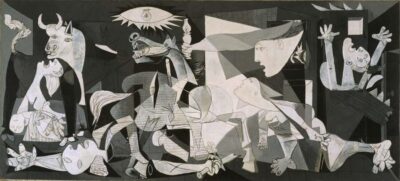
Reina Sofía Museum Ticket with In-App Audio Guide
Read our review →Browse the lists this tour appears in