
Reviewed · REINA SOFIA MUSEUM TOURS
Spanish Civil War start of 2 World War, Guernica Franco
Madrid’s Civil War story is written across the city, from buildings scarred by bombing to monuments that still raise hard questions about victory and memory. This walk connects those places with the larger story of how the war began, how Madrid endured its long siege and how Spain moved into dictatorship.
I like that the route pairs real Madrid locations with clear historical themes, rather than leaving you with a jumble of dates. I also like the use of maps, images, audio and video, which can make a complicated conflict easier to follow. The main consideration is the pace: at about two and a half hours, you cover several stops and a substantial stretch of the city.
Key points
- Seven stops connect Callao with the Victory Arch, moving from central Madrid toward Moncloa.
- The siege of Madrid is a central theme, including the city’s 900 days under attack.
- Guernica and wartime art get dedicated attention, including Picasso’s painting and the Prado’s wartime protection.
- The guide uses exclusive supporting material, including maps, images, audio and video.
- The price is listed as $3.62 per group of up to 15, so check the total and group terms carefully before booking.
- The walk ends near Moncloa Metro, with no site entry tickets needed.
From Callao into Madrid’s wartime streets
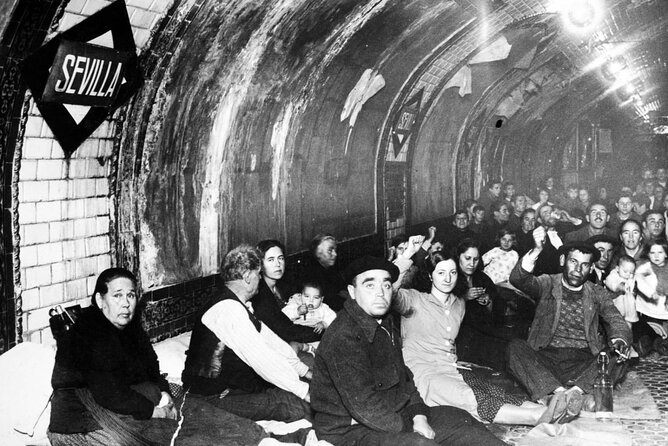
The tour begins at C. del Postigo de San Martín, 26, near Plaza del Callao. The first stop focuses on bombing in central Madrid, visible scars on buildings and what daily life looked like for ordinary Spaniards at war. One question on the route asks whether you would still go to the movies. It is a small, human detail that helps bring the conflict down from broad political forces to everyday choices.
This opening is a useful way into a subject that can feel dense. Instead of beginning with a long lecture, the guide starts with the city and the lives shaped by war. You can expect the discussion to connect Madrid’s physical traces with the experience of civilians, rather than treating the conflict as a list of military events.
The stop is listed at 15 minutes, so it is an introduction, not a full examination of every building or event. That short format makes sense on a walking tour, but you should arrive ready to listen and keep moving.
More Reina Sofia tours around Madrid:
- Madrid: Reina Sofía Museum Entrance Ticket
★ 4.5 · 6,889 reviews - Madrid: Reina Sofía Museum Guided Tour
★ 4.3 · 659 reviews - Reina Sofia Museum Small Group Tour -6 people maximum-
★ 5.0 · 433 reviews
Two Spains at the Senate
At the Palacio del Senado, the focus shifts to how the Spanish Civil War began and the divisions between two Spains. The itinerary also frames Spain as a kind of World War II test range, pointing to the way the conflict sits close to the wider European war that followed.
This is where the walk starts to build its political frame. The point is not just to hear that Spain was divided, but to consider what that division meant and why the conflict became so consequential. The guide has about 20 minutes here, enough for an overview supported by the tour’s visual and audio material.
If you are new to the subject, this is likely to be one of the most useful stops. If you already know the broad outline, listen for how the guide links the start of the war to Madrid’s experience later in the route. The advertised theme is broad, so the depth you get will depend in part on the guide’s presentation and questions from the group.
Franco and the 900-day siege at Plaza de España
The route continues to Plaza de España, where Francisco Franco and the defense of the capital take center stage. The siege lasted 900 days, and the tour also touches on Madrid under bombardment and the sayings that emerged during wartime.
That range gives this stop a practical purpose: it moves from Franco as a central figure to the city’s extended ordeal and the language people used to make sense of it. The itinerary allows 15 minutes, so expect a focused explanation rather than a long pause at each subject.
I like the inclusion of wartime sayings. Small traces of everyday speech can show how people lived through fear and uncertainty in ways that broad military summaries often miss. The stop can also help you understand why Madrid’s Civil War story is tied so closely to the defense of the capital.
Propaganda, money and memory at Templo de Debod
At Templo de Debod, the conversation turns to who paid for the war and how propaganda shaped a conflict fought in part through ideas. The stop also includes the temple itself and the Sculpture to the Fallen of the Civil War.
The shift from battlefield events to money and propaganda is valuable. It reminds you that wars are sustained by resources and competing stories, not only by soldiers and weapons. The monument adds another layer: how a city remembers the dead and gives public form to a painful past.
You have about 20 minutes here. The stop has several themes packed into it, so it may be worth keeping a question in mind: how does a place or monument shape what a society chooses to remember? The guide’s materials can help make those abstract questions more concrete.
More history tours around Madrid:
- Madrid Essential: Historic Center, Plaza Mayor & Royal Palace
★ 5.0 · 6,416 reviews - Madrid Historical Tour with Local Guide in Eco Tuk Tuk Private
★ 5.0 · 876 reviews - Madrid Historic Centre Food Tour with Authentic Tapas & Wines
★ 5.0 · 814 reviews - Madrid Historical Walking Tour
★ 5.0 · 721 reviews
Guernica and art under threat on Paseo del Pintor Rosales
On Paseo del Pintor Rosales, the tour takes up Picasso’s Guernica and the bombing of civilians. It also discusses the Prado Museum and the protection of art under fire, along with Christmas during a truce.
This is one of the route’s most compelling combinations. Guernica is a famous response to civilian suffering, while the Prado theme turns attention to the practical question of safeguarding art during war. The mention of a Christmas truce offers a quieter counterpoint, a brief pause within a wider story of violence.
The stop is listed at 20 minutes. That is enough to connect art with the conflict, but not to cover every aspect of Picasso’s work or the Prado’s collections. If art is your main interest, treat this as a thoughtful introduction rather than a museum visit. No site entry is required, and the tour is built around the outdoor route.
Music, medicine and the war’s aftermath
At the Cuartel General del Ejército del Aire, the itinerary turns to music, including the song They Won’t Pass and Cara al Sol. It also covers the first remote blood transfusion, life amid death, the end of the Civil War, World War II and dictatorship.
This stop brings together culture, medical history and political aftermath. The reference to remote blood transfusion points to the practical efforts to save lives during the conflict. The songs, meanwhile, show how music can become part of political identity and wartime messaging.
The subject list is ambitious for 15 minutes. A good guide will need to make connections rather than linger on every detail. The key value here is the bridge from the end of the Spanish Civil War to the dictatorship and the broader European conflict. The tour’s use of supporting material may help keep those links clear.
The Victory Arch and the question of what to preserve
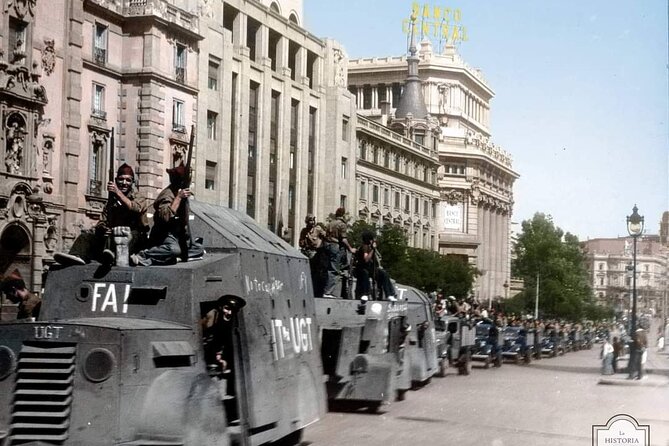
The final stop is the Arco de la Victoria, or Victory Arch, where the route asks whether the monument should be destroyed or preserved. It also leaves room for reflection on the ways wars are remembered.
That is a fitting end to a tour concerned not only with what happened, but with how Madrid lives with its past. The arch is not presented simply as a photo stop. Its meaning, and the debate around keeping or removing it, gives you a final question to carry away.
The walk ends at Av. de la Memoria, 32, in Moncloa-Aravaca, near Moncloa Metro. The final stop is listed at 20 minutes. From Callao to Moncloa, the route makes a clear geographic journey as well as a historical one, though the exact walking distance is not provided.
What the guide and visual material add
The local guide is the heart of this experience. The tour’s subject moves from political divisions to bombardment, propaganda, art, medicine and dictatorship. A guide who can connect those strands clearly makes the difference between a history walk that feels organized and one that feels like a string of names.
Guides named in past tours include Victor, Maikel, Guillermo, Adria and Chato. You cannot assume which guide will lead your departure, but the praise around their explanations points to a tour that aims to be both informative and engaging. Victor is described as making the subject educational and fun; Maikel’s tour is described as using historical landmarks and visual aids to explain causes, events and effects. Adria is noted for a clear and sensitive presentation, while Chato is described as generous with his time.
The supplied maps, images, audio and videos are more than extras for a topic like this. They can help you picture events that are not immediately visible from the street and give shape to unfamiliar names or political ideas. You also receive a link to personalized recommendations for things to do in Madrid, and the guide offers personal attention after the tour.
The tour is offered in English. The maximum group size is listed as 30, while the stated price is for a group of up to 15. That difference is worth checking when you book, especially if you are comparing the advertised price with the final cost for your party.
Price, timing and practical value
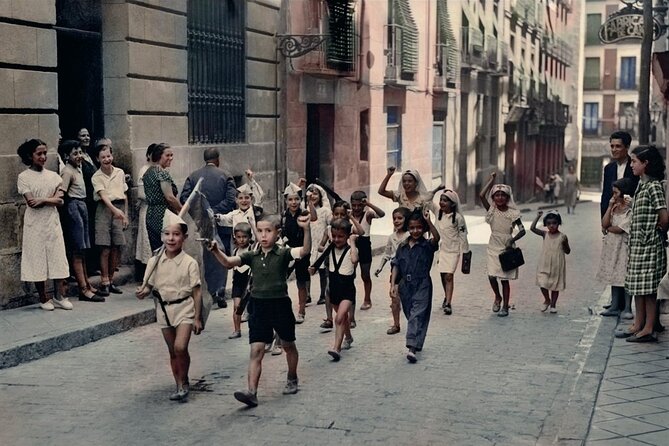
The experience lasts about 2 hours and 30 minutes. The seven stops have individual timings that add up to less than that total, leaving time for moving between locations. You should plan for a sustained city walk, not seven long visits with extended breaks.
The listed cost is $3.62 per group of up to 15, an unusually low figure for a guided tour. Treat the displayed amount carefully: confirm the final price and how the group limit applies before you commit. Tips are not included, and the tour notes them as a way to recognize the guide’s effort. There are no required entry fees at the stops.
The tour is recommended by all of its 462 ratings, with a 5 out of 5 score. That is a strong signal of satisfaction, especially for a history-focused walk, but the best reason to choose it is the combination of local sites, a clear sequence of themes and an engaging guide. The route is especially useful if you want an introduction to Madrid’s Civil War experience without spending a full day in a museum.
Booking is, on average, made 16 days ahead. That is an average rather than a rule, but it suggests planning ahead may be sensible if your dates are fixed. Free cancellation is available until 24 hours before the start time. Confirmation is received at booking, service animals are allowed, and the activity is near public transportation.
Who will get the most from this walk
This tour suits you if you want to understand how the Spanish Civil War shaped Madrid and how its story connects to Franco, World War II and dictatorship. It also works well if you like learning outdoors, with real city locations anchoring a complex subject.
You do not need to be an expert. The route begins with everyday life and visible traces, then builds toward political divisions, siege, propaganda and memory. The supporting material and guide’s explanations should help orient you if the history is new to you.
It may be less suited to you if you want long, quiet time at each location, a museum-focused experience or a narrow military-history tour. The itinerary covers a lot in roughly two and a half hours. Go in expecting a broad, guided overview, and use the walk to identify themes you may want to explore further.
Should you book it?
Book this walk if Madrid’s Civil War history matters to you and you want a concise route that links the conflict to city streets, art and public memory. Its strongest features are the guide-led explanations, the visual material and the range of themes, from the 900-day siege to Guernica and the debate around the Victory Arch.
Before paying, verify the unusually low group price and how it applies to your party. If those terms work for you, this is a worthwhile way to see Madrid through a chapter of its history that still shapes the city.
FAQ
How long does the tour last?
It lasts approximately 2 hours and 30 minutes.
Where does the tour begin?
It begins at C. del Postigo de San Martín, 26, Centro, Madrid.
Where does the tour end?
It ends at the Arco de la Victoria, at Av. de la Memoria, 32, in Moncloa-Aravaca. Moncloa Metro is nearby.
What language is the tour offered in?
The tour is offered in English.
What is included?
A local guide, exclusive materials such as maps, images, audio and videos, a link to personalized Madrid recommendations and personal attention from the guide after the tour are included.
Are site entry tickets included?
Entry tickets are not included, but the tour information says they are not necessary for the stops.
What is the maximum group size?
The activity has a maximum of 30 participants. The listed price is $3.62 per group of up to 15, so check the price terms when booking.
Can I bring a service animal?
Yes. Service animals are allowed.
Can I cancel for a refund?
You can cancel at least 24 hours before the experience starts for a full refund. Cancellations or changes made less than 24 hours before the start time are not accepted for a refund or change.
Just added in Madrid
- Prado Museum and Royal Palace Private Tour★ 5.0 · 18 reviews
- Prado Museum VIP Tour with Drinks & Tapas★ 5.0 · 4 reviews
- Prado and Reina Sofia Museums Private Tour★ 5.0 · 6 reviews
- Prado Museum and Royal Palace Private Tour in Madrid★ 5.0 · 3 reviews
- Prado Museum Private Tour★ 5.0 · 62 reviews
- Visita privada al Museo del Prado★ 5.0 · 34 reviews
- Prado Museum and Reina Sofia Museum Private Tour★ 4.5 · 6 reviews
- Prado Museum Private Tour with Tickets Included★ 5.0 · 3 reviews
Reina Sofia Museum Tours, compared.
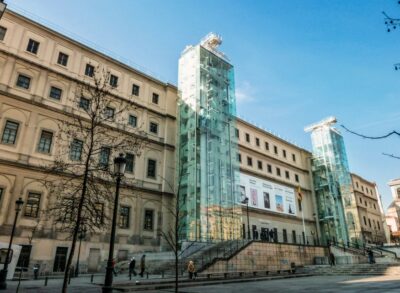
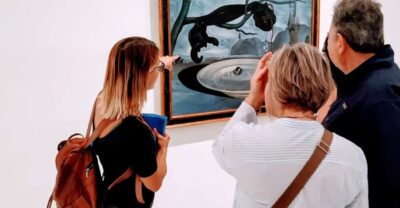
Reina Sofia Museum Small Group Tour -6 people maximum-
Read our review →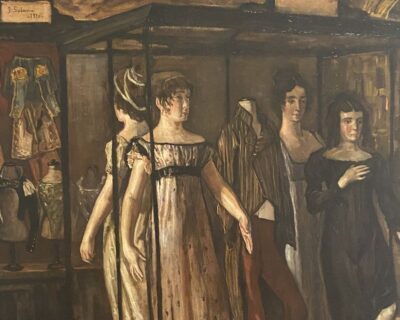
Guided Tour of Reina Sofía Museum with Entry Ticket
Read our review →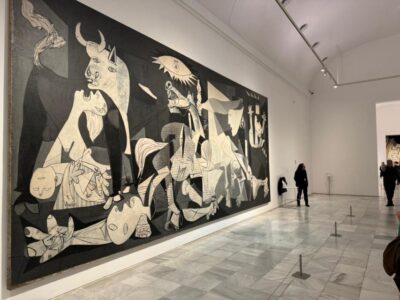
Reina Sofia and Prado Museum Tickets and Guided Tour
Read our review →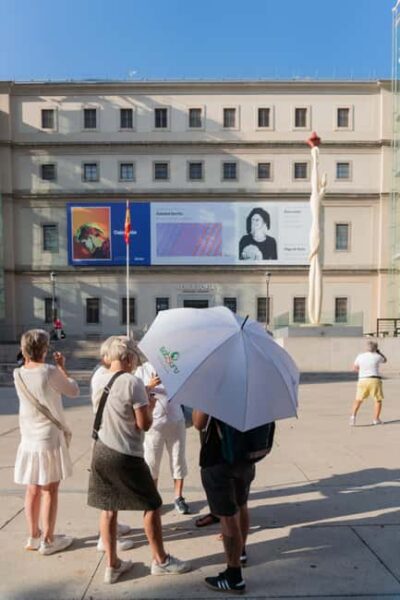
Reina Sofía Guided Tour with Skip-the-Line Tickets
Read our review →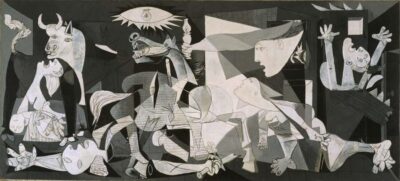
Reina Sofía Museum Ticket with In-App Audio Guide
Read our review →
Browse the lists this tour appears in