
Reviewed · TOLEDO TOURS
Tour of the Inquisition and Witchcraft in Toledo
Toledo’s Inquisition story is not just a tale of trials and torture. It is also a story of public power, religious authority, and neighbors living under suspicion. This 90-minute walk follows those themes through the old city, beginning near Zocodover Square and passing churches, a former prison, and the Jewish Quarter.
I like two things here: the route ties events to actual places, and the guide covers the tribunal’s hierarchy and eventual end, not only its punishments. The approach is historical rather than built around spooky legends, which helps keep a difficult subject grounded.
The main caution is reliability. The tour requires at least six people, and it has been canceled close to start time when that minimum was not met. If your Toledo schedule is tight, have a backup plan.
- Zocodover sets the scene: Start near the square where public acts of penance took place.
- A history-first focus: Expect discussion of the Inquisition’s structure, cases, and punishments, rather than a tour centered on ghost stories.
- Several layers of Toledo: The route takes in the cathedral area, the Jewish Quarter, San Pedro Mártir, and other historic sites.
- Spanish-language guiding: The tour is conducted in Spanish, with a local official guide.
- A modest price, with a group-size caveat: The cost is $10 per person, but at least six people are needed for the tour to run.
- A considerate guide can matter: Vanessa has led the tour with sensitivity to the subject and to the people in her group.
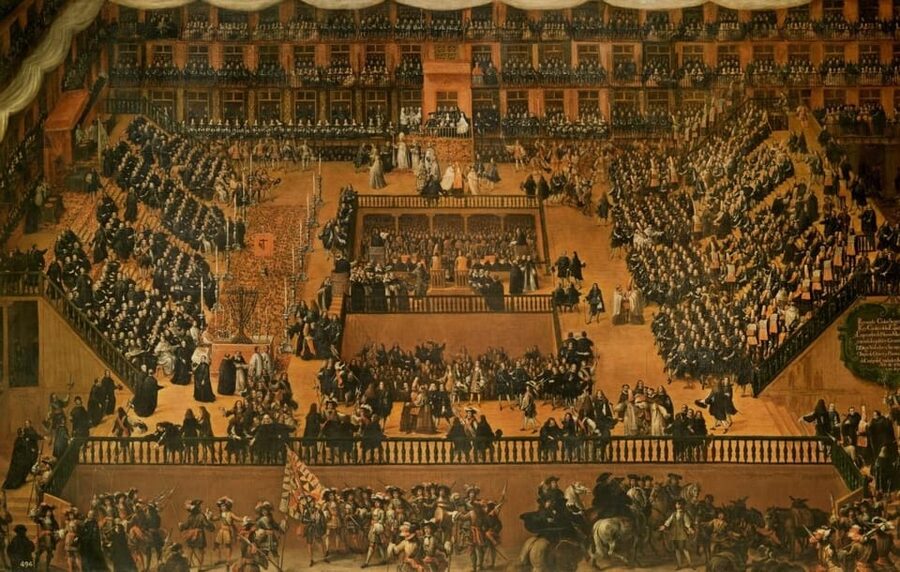
Starting at Zocodover, where public penance played out
Meet at Calle Armas 3, opposite the Rodilla café at the beginning of Plaza de Zocodover. The guide carries a small colored flag, described as pink in the tour information, so look for it near the square rather than wandering off to another meeting point.
Zocodover is a fitting place to begin. The square was associated with autos de fe, public ceremonies in which people condemned by the Inquisition abjured their sins and sought reconciliation with the Catholic Church. These ceremonies were not simply private religious proceedings. Their public setting made authority visible and turned punishment into a warning to the wider community.
The guide’s job here is to give you a framework for the walk. The Inquisition began in the late 15th century under the Catholic Monarchs, Ferdinand and Isabella, and continued into the 19th century. Its tribunals pursued heresy and other practices judged contrary to Catholic belief. In Toledo, an important religious and cultural center, the institution had a strong presence in civic life.
That context helps you understand the stops that follow. The city’s narrow streets and churches can look picturesque today, but the walk asks you to consider how religious institutions and public spaces could also serve the machinery of investigation and punishment.
Posada de la Hermandad and the machinery of accusation
The route passes the Posada de la Hermandad, where the guide discusses prisons, punishments, and methods of torture associated with the Inquisition. The point is not simply to collect grim details. It is to understand how a charge could become a formal process, and how fear could shape daily life.
Accusations of witchcraft and sorcery were treated as forms of heresy. People accused could be arrested and interrogated, and torture was used to try to obtain confessions. Penalties varied: they could include confiscation of property or public penance, while the most extreme cases could end in execution. The guide’s account should help distinguish the tribunal’s processes from the legends that later grew around them.
This is a heavy subject, and the tour’s tone matters. A Spanish guide named Vanessa has been praised for combining energy and kindness with sensitivity, including when a Jewish participant was in the group. That is useful context, though guides can vary, and the topic calls for care rather than theatrical shock.
The walk also touches on the hierarchy of the Inquisition and the sequence from detecting an alleged crime to carrying out a sentence. That institutional view is valuable. It shifts the story from a collection of cruel episodes to a system with officials, procedures, and consequences.
Other tours people book in Toledo:
- Guided Walking Tour of Immortal Toledo
★ 5.0 · 1,116 reviews - Toledo Private Tour with Licensed Local Guide
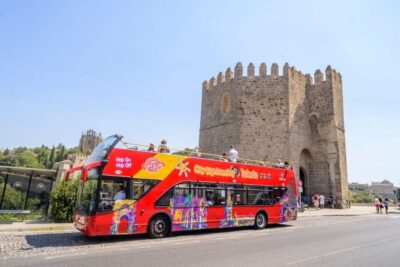
★ 5.0 · 884 reviews - Toledo: City Sightseeing Hop-On Hop-Off Bus Tour & Extras
★ 4.3 · 683 reviews
The cathedral area and Toledo’s religious authority
The itinerary includes a guided stop at Toledo Cathedral. The tour information does not specify whether this means entering the building, so think of this as a location for discussion rather than a guaranteed interior visit. The cathedral’s presence in the route underscores Toledo’s role as a major religious center during the period under discussion.
The Inquisition was an ecclesiastical court, but its effects reached beyond church walls. The walk links religious authority to public life, showing how accusations, trials, and punishment affected the people of the city. A guide can use the cathedral area to set the wider context before moving back into streets where the tribunal’s work was made visible.
You do not need to arrive with specialist knowledge. The most helpful questions are simple ones: who had authority to investigate, how were accusations handled, and what happened to the accused? The tour’s advertised focus on the tribunal’s hierarchy and process gives those questions a place in the story.
Into the Jewish Quarter, with care for a complicated past
The route continues through Toledo’s ancient Jewish Quarter. This stop adds an important layer to a tour that could otherwise focus only on courts and punishment. Toledo’s religious and cultural history includes different communities, and the Inquisition’s work took place within that broader setting.
The walk does not promise a detailed account of every community or every period of Toledo’s history. Its focus remains the Inquisition and witchcraft, with the Jewish Quarter as one part of the route. Still, it is a meaningful setting for considering how accusations of religious difference could affect real people and families.
A guide’s sensitivity is especially important here. The tour covers persecution and religious identity, not just old buildings. Vanessa’s considerate handling of a group that included a Jewish participant suggests the subject can be approached thoughtfully, but you should expect a serious historical conversation rather than a light stroll.
San Pedro Mártir and the scale of the tribunal
At the Convento de San Pedro Mártir, the guide discusses the organization of the Inquisition’s headquarters and the procedures used from the first detection of an alleged offense through to the prisoner’s execution. The site is also linked to an early auto de fe in the 15th century, described as involving more than 700 people.
That number gives a sense of scale, though the most useful part of the stop is how it connects the public ceremony to the institution behind it. The tribunal was not a single judge acting alone. The tour’s attention to hierarchy and process helps you picture how cases moved through a system and how public events reinforced its authority.
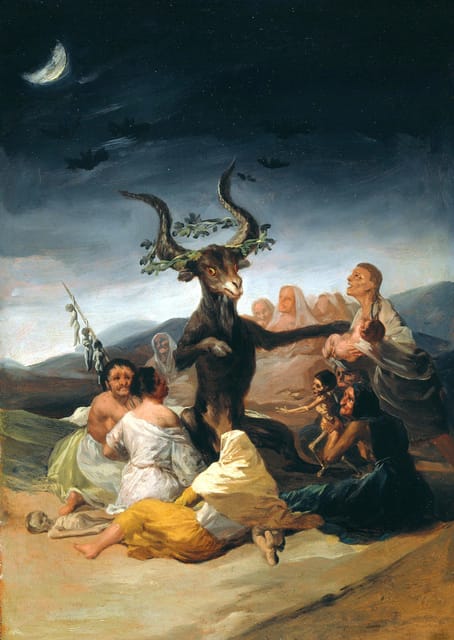
The subject can be upsetting. The guide’s historical emphasis is a good fit if you want to understand how the institution operated, but less suited to anyone hoping for a playful, frightening ghost walk. Witchcraft stories and local folklore are part of Toledo’s cultural memory, yet the tour’s focus is more on documented history than on making those legends feel sensational.
Same city, a different kind of day:
- Madrid: Full-Day Guided Tour of Toledo with Cathedral Visit
★ 4.6 · 647 reviews - Toledo: Tourist Bracelet with Entry to 7 Attractions
★ 4.3 · 597 reviews - Toledo: Guided Monument Walking Tour with Wristband Pass
★ 4.5 · 487 reviews - Night Guided Tour of Magical Toledo
★ 4.5 · 459 reviews
San Vicente and the Inquisition’s eventual end
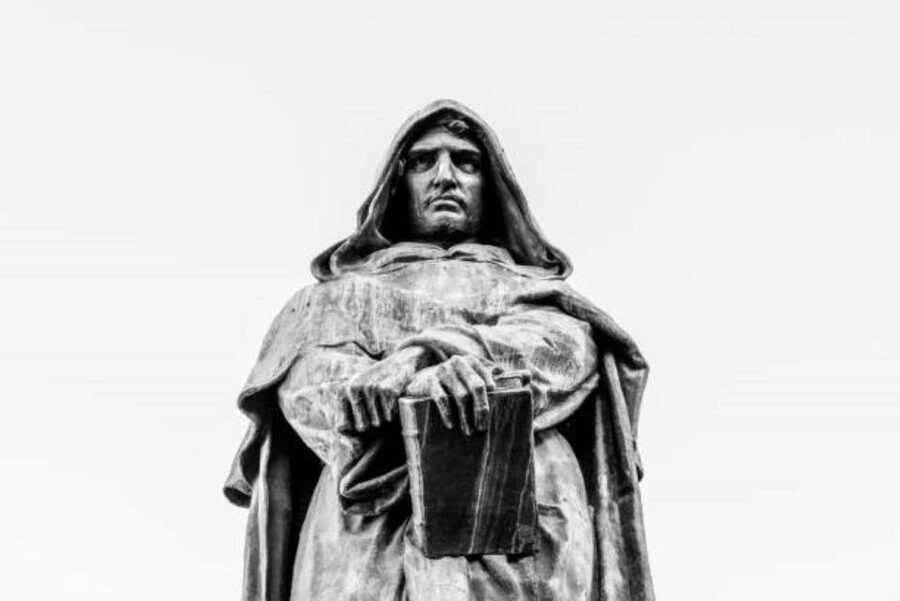
Near the old Church of San Vicente, the guide turns to the end of the Inquisition in Spain and to stories of some of Toledo’s best-known prisoners. This is an important change of direction. A walk about persecution needs to explain not only how the institution gained power, but also how its authority eventually came to an end.
The tour does not specify which prisoners will be discussed, so the exact stories may depend on the guide. What you can expect is a local focus: the subject is not treated as a distant national episode, but connected to people and places in Toledo.
This part of the walk also helps place the Inquisition’s long timeline in perspective. It began in the 15th century and continued until the 19th century, a span far longer than the period most visitors might first imagine. The guide’s account of its ending gives the route a natural close, rather than leaving you with only the bleakest episodes.
What the $10 price gets you
At $10 per person, the tour is an inexpensive way to add historical context to a visit to Toledo. The price includes an official local guide, and the 90-minute route links several sites to a single subject. You are paying for interpretation and a planned walk, not entry to a collection of buildings.
The tour information says there are no ticket payments or additional expenses required. That makes the stated price straightforward, though it does not promise entry into the cathedral or any other site. If you want to go inside a particular building, check separately rather than assuming the guided stop includes admission.
The value is strongest if you want a focused account of the city’s Inquisition history. A guide can connect the tribunal’s structure, punishments, public ceremonies, witchcraft accusations, and Toledo’s religious setting in a short span. If you prefer a broad overview of Toledo’s architecture or a tour devoted to legends, this is a narrower choice.
The overall rating is 3.3 out of 5, so I would treat the experience as promising but not risk-free. Positive feedback highlights the guides’ friendliness, energy, historical knowledge, and sensitivity. The main concern is not the subject matter but cancellations: the tour requires six participants, and at least one cancellation came less than an hour before the scheduled start because the minimum had not been reached.
Practical details before you book
The tour lasts 1.5 hours and is conducted in Spanish. It is listed as wheelchair accessible. If access needs are important to you, contact the provider to confirm that the route and current conditions suit your requirements.
The minimum group size is six people. At the same time, reservations for a large family or friends group are limited to six people per group. If you are traveling with a larger party, do not assume everyone can book together; check with the provider before making plans around it.
You can reserve without paying upfront and cancel up to 24 hours in advance for a full refund. If you cannot attend, cancel your reservation rather than leaving the guide waiting. Because the minimum number can affect whether the walk runs, I would avoid placing an unmovable commitment immediately after it.
Should you book this Toledo walk?
Book it if you want a short, affordable, Spanish-language introduction to the Inquisition in Toledo, especially if you value the connection between historical events and specific places. The focus on the tribunal’s hierarchy, famous prisoners, public ceremonies, and eventual end gives the walk more substance than a tour built only around witchcraft tales.
Think twice if you need a guaranteed departure at a fixed time, want an English-language guide, or expect a theatrical mystery tour. The six-person minimum creates a real scheduling risk, and the tour’s strength is historical explanation, not spectacle. If that fits your interests and you have some flexibility, it is a worthwhile way to look at Toledo’s old streets through a difficult but important chapter of the city’s past.
FAQ
How long is the tour?
The walk lasts 1.5 hours.
What is the price?
The listed price is $10 per person.
What language is the tour in?
The live tour guide speaks Spanish.
Where is the meeting point?
Meet at Calle Armas 3, opposite the Rodilla café at the beginning of Plaza de Zocodover. The guide carries a small colored flag.
Which places are included on the route?
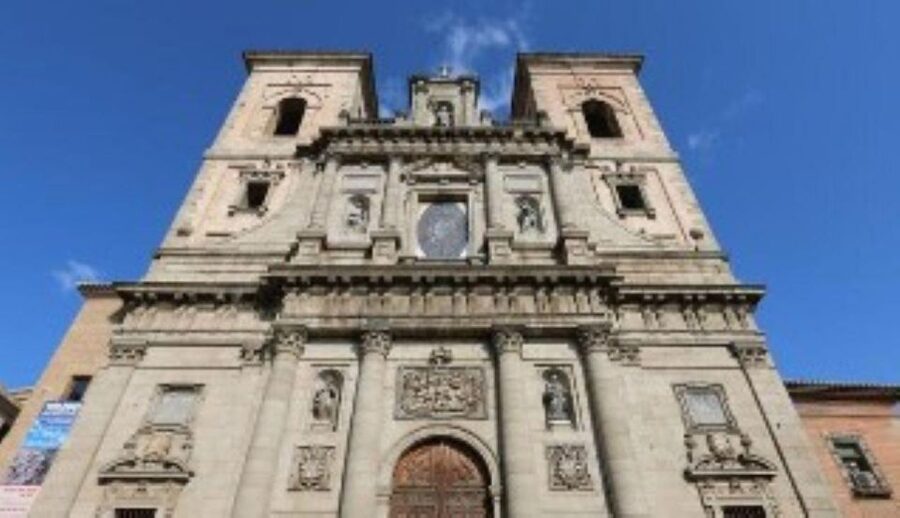
The route starts and ends at Calle Armas 3 and includes the Posada de la Hermandad, Toledo Cathedral, the Jewish Quarter, the Convento de San Pedro Mártir, Iglesia de los Jesuitas, and Plaza de San Vicente.
How many people are needed for the tour to run?
At least six people are required. Reservations for a family or friends group are limited to six people per group.
Can I cancel or pay later?
You can reserve now and pay later. You can also cancel up to 24 hours in advance for a full refund.
Just added in Toledo
- TOUR “ TOLEDO TODO EN UNO ”★ 4.6 · 67 reviews
- The Enchanted City: A Mysterious Tour of Toledo★ 4.2 · 29 reviews
- TOUR TOLEDO 3 CULTURAS ⭐⭐⭐⭐⭐★ 4.8 · 16 reviews
- Toledo’s Gems: 3-Hr Private Tour with Expert Local Guide★ 4.9 · 18 reviews
- Toledo: Guided Walking Tour with Cathedral Ticket and Tour★ 4.2 · 98 reviews
- Toledo: Monumentos esenciales: Alcazar, Catedral, Sinagoga★ 3.7 · 6 reviews
- TOLEDO: Private Tour With Official Guide★ 5.0 · 6 reviews
- Toledo: Three Cultures Walking Tour in Spanish★ 4.4 · 66 reviews
Toledo Tours, compared.

City Sightseeing Hop-On Hop-Off Bus Tour & Extras
Read our review →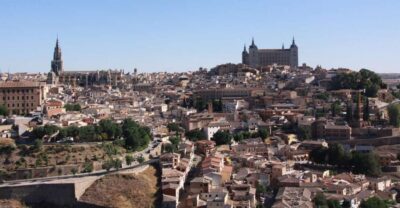
Full-Day Guided Tour of Toledo with Cathedral Visit
Read our review →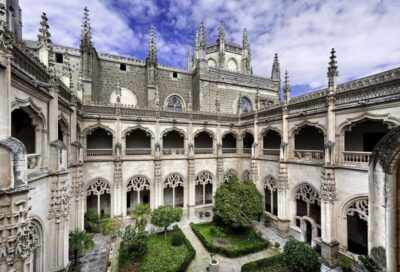
Guided Monument Walking Tour with Wristband Pass
Read our review →
Browse the lists this tour appears in