
Reviewed · SEGOVIA TOURS
Skip the Line Admission Ticket to Cathedral of Segovia
Segovia Cathedral is a grand surprise in a compact city: the last Gothic cathedral built in Spain, with a light-filled interior that feels more spacious than crowded with ornament. The 16th-century Flemish windows and the enormous choir at the center give you an immediate sense of the building’s scale and character.
I like two things here in particular: you can explore the chapels and museum at your own pace, and the ticket also includes a free visit to the Episcopal Palace. Those extras make it easy to build a substantial cultural stop into a day in Segovia without committing to a guided group.
One caution: the phrase skip the line does not always mean walking straight inside. You may still need to have your QR code validated at the ticket booth, and one visitor found the entrance closed before the posted 7 p.m. closing time. Arrive with a little time to spare, rather than planning your visit for the final minutes of the day.
What to know before you go

- The cathedral is the main event: See the tall Gothic interior, central choir, high altar, and more than 20 chapels.
- Look for the Flemish windows: Their light helps the broad, uncluttered interior feel open rather than gloomy.
- The cloister predates the cathedral: Its late-Gothic doorway and stonework were moved from the old cathedral.
- The small museum rewards a slower pace: It holds religious art, jewelry, paintings, and rare manuscripts.
- The ticket includes another historic stop: Admission to Segovia’s Episcopal Palace is included at no extra charge.
- Allow one to two hours: The admission is self-paced, but extra time gives you room to look closely and visit the palace.
A vast Gothic church with a surprisingly simple interior
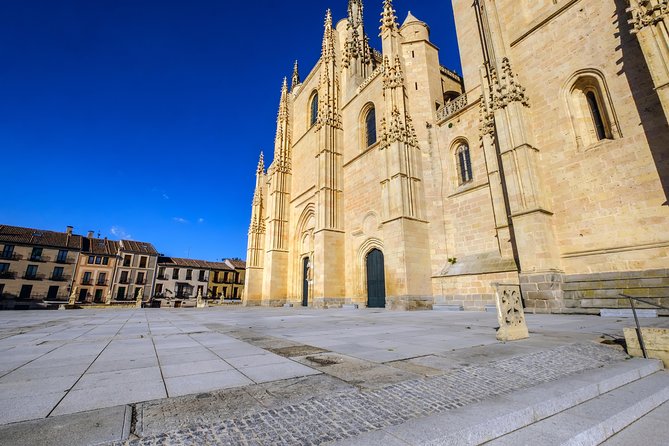
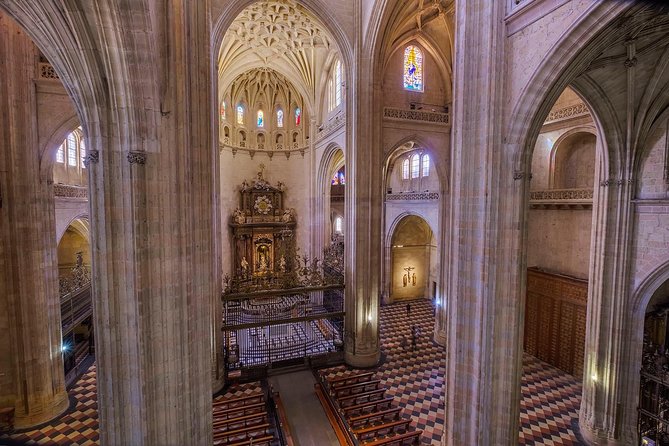
The cathedral is often called the last Gothic cathedral built in Spain. That label matters once you step inside. Instead of a dim space packed with heavy decoration, you find a broad, bright interior, with clear sightlines and room to take in the architecture before turning your attention to individual artworks.
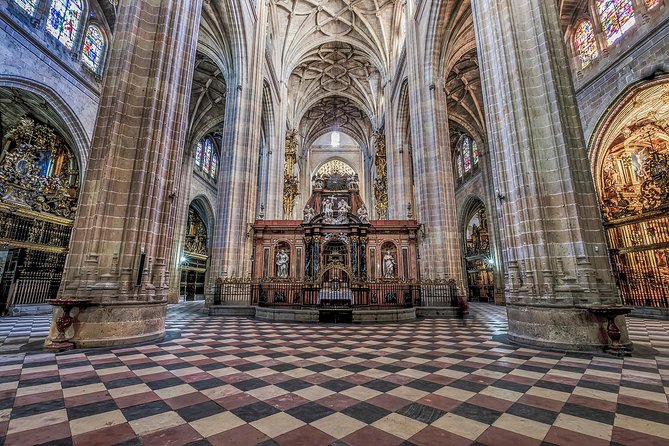
The north transept is the entrance. From there, pause before setting off around the chapels. The 16th-century Flemish windows bring light into the church, while the uncluttered arrangement lets the shape and height of the building do much of the talking. If you tend to feel overwhelmed in churches where every wall competes for attention, this calmer layout is a welcome change.
At the center stands the large Gothic choir, dating from the 15th century and therefore older than the cathedral itself. Its position gives the interior an unusual rhythm: rather than leaving the middle open, the choir forms a substantial centerpiece between the entrance and the far end of the church. Take a moment to walk around it and notice how it divides the space without hiding the cathedral’s scale.
At the east end, the high altar presents a different style. Its 18th-century altarpiece was made by Sabatini, offering a later focal point against the Gothic structure. The contrast is useful if you want to see how the cathedral’s appearance developed across different periods, rather than imagining it as a building completed in one uninterrupted campaign.
More skip-the-line tickets around Segovia:
- Madrid: Royal Palace Expert Guided Tour with Skip-the-Line
★ 4.7 · 6,986 reviews - Madrid: Royal Palace Skip-the-line Guided Tour
★ 4.9 · 3,146 reviews - Madrid: Royal Palace Skip-the-Line Guided Tour
★ 4.5 · 2,140 reviews
More than 20 chapels, each with a different focus
The walls and apse contain more than 20 chapels. You do not need to inspect every one in detail to appreciate the variety. A self-guided visit lets you slow down at the works that catch your eye and move on when a chapel feels less compelling.
One particularly notable stop is the third chapel on your right as you enter, the Chapel of San Cosme and San Damian. It contains a wooden Lamentation group by Gregorio Fernández, a 17th-century Baroque sculptor. The subject and carved figures offer a more emotional, dramatic contrast to the cathedral’s spare overall impression.
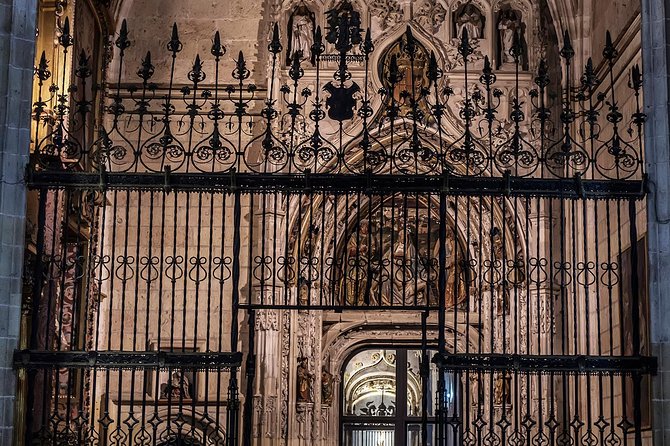
The Blessed Sacrament Chapel is another good place to linger. Churriguera created its elaborate design, and the chapel brings together stained glass, carved choir stalls, and paintings from the 16th and 17th centuries. Look for the reredos depicting Christ’s deposition from the cross, a work by Juan de Juni. Its densely worked details make this chapel feel quite different from the larger, more open nave.
The cathedral is best approached with a little curiosity, not a checklist. You might find that one artwork holds your attention longer than expected, while another room takes only a quick look. That flexibility is one of the strongest reasons to choose an admission ticket and explore at your own pace.
The cloister, moved from the old cathedral
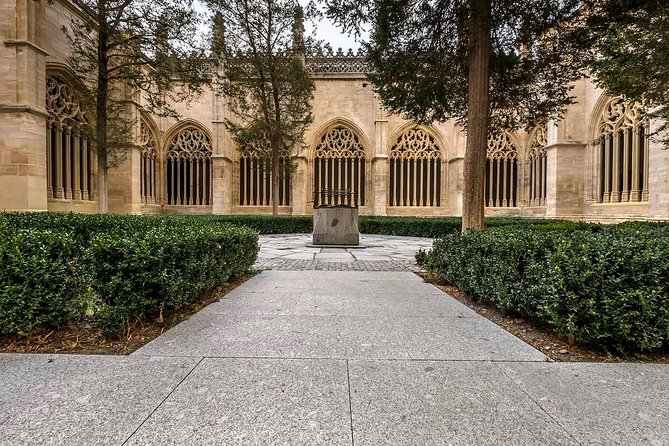
Across from the entrance, in the southern transept, a door leads to the late-Gothic cloister. This is more than a quiet architectural side trip: the cloister is older than the cathedral itself. Both it and its elaborate doorway were transferred from the old cathedral, and the work is associated with architect Juan Guas.
That detail gives the cloister a particular appeal. You are not simply stepping into a separate courtyard; you are seeing parts of an earlier religious building preserved within the later one. The change of pace also helps. After the scale and activity of the main church, the cloister offers a more contained space where you can look closely at the stonework.
Under the pavement just inside the cloisters lie the tombs of Juan and Rodrigo Gil de Hontañón. Their burial place is especially fitting because the three men, including Guas, helped shape the final phase of Spain’s Gothic style. You do not need to know the full history of Spanish architecture to appreciate the link between the designers and the space around you. It adds a human point of interest to a room that might otherwise seem like a pleasant architectural pause.
A compact museum with manuscripts and a Mudéjar ceiling
The small museum of religious art is reached from the cloister, with some of it set in the first-floor chapter house. This is a worthwhile part of the visit if you enjoy looking beyond the main church and its best-known features.
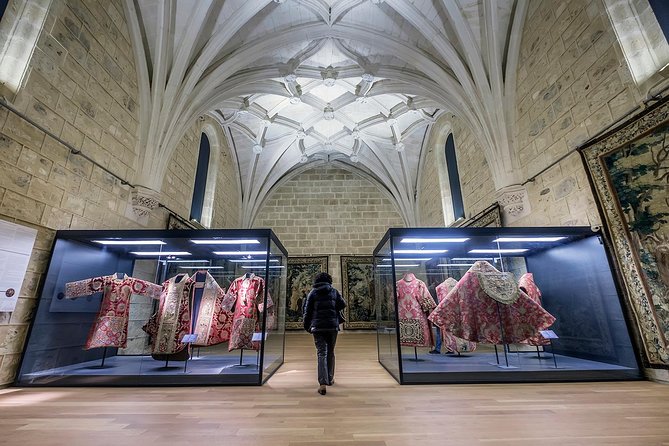
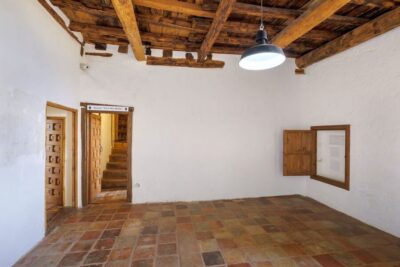
The chapter house has a white-and-gold 17th-century ceiling, a late example of Mudéjar artesonado work. Look up before focusing on the displays. The ceiling is one of those details that can be easy to miss if you move quickly from room to room, yet it helps explain why the museum feels like an attraction in its own right rather than just a collection of objects.
Inside, you will find jewelry, paintings, and rare antique manuscripts. The collection is described as small, so it is better to think of it as a focused complement to the cathedral than as a large art museum. If you have already spent time among the chapels, an hour or so may be enough for a satisfying visit to the church and museum together. If art and architectural details are your priority, the full one-to-two-hour estimate gives you room to linger.
More tickets and passes around Segovia:
- Segovia Cathedral Entrance Ticket
★ 4.7 · 237 reviews - Madrid: Tour Bernabéu Entry Ticket
★ 4.5 · 21,573 reviews - Madrid: Prado Museum Entry Ticket
★ 4.6 · 17,509 reviews - Madrid: Royal Palace Fast-Access Admission Ticket
★ 4.6 · 13,856 reviews
Does the skip-the-line ticket save time?
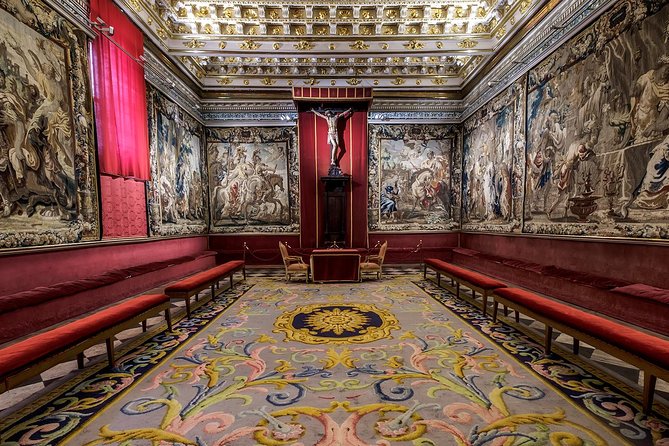
The ticket is offered as a way to make better use of your time in Segovia. At the listed price of $5.15 per person, it is an inexpensive way to arrange admission in advance. But do not treat the words skip the line as a promise that you will pass every ticket-related queue.
Some ticket holders have still needed to join the purchase line so staff could scan or validate their QR code. Others found booking ahead made entry easier and saved time. The difference may depend on how busy the cathedral is and how the ticket is being processed when you arrive. In a quieter period, you may not gain much over buying admission on the spot. If you prefer to have your plans settled before reaching the door, the advance ticket can still be useful.
Bring the mobile ticket ready to show, and give yourself a buffer for validation. The listed hours are 9:30 a.m. to 7 p.m. daily, for the period September 15, 2025, through September 14, 2026. However, one person arrived at 6 p.m. and found the entry doors closed despite the posted closing time. The practical lesson is simple: do not plan on arriving late and assume you will be admitted until 7.
The ticket confirms admission, but transportation to and from the cathedral is not included. The attraction is near public transportation, and most people can participate. Children must be accompanied by an adult.
The Episcopal Palace adds value to the ticket
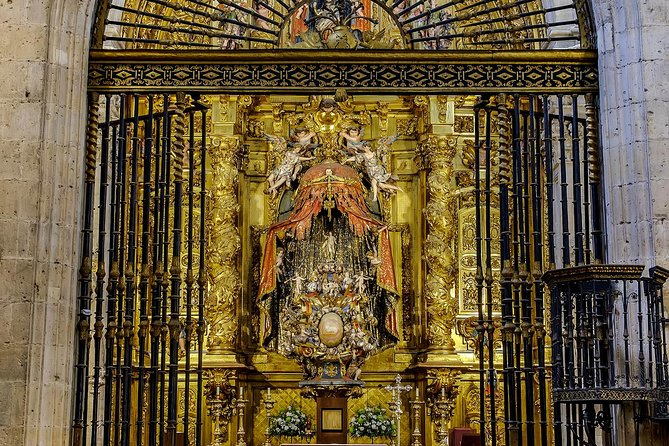
Your admission also includes a free visit to the Episcopal Palace of Segovia. That is a handy extra if you want to see more than the cathedral during your time in the city, especially since the main ticket is inexpensive. It gives you another reason to set aside a little more time instead of treating the church as a quick photo stop.
The palace’s inclusion does not mean transport is provided, so plan to make your own way between attractions. The information available here does not specify how long the palace takes or what its displays include. I would treat it as a bonus to explore if your schedule allows, rather than assuming it is part of a guided or timed route.
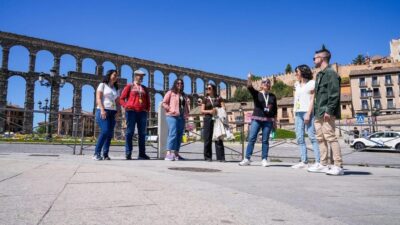
Segovia has other major sights, including the Roman aqueduct. If you are planning a full day, the cathedral can form one part of a broader visit, but the admission itself covers the cathedral and Episcopal Palace only. The aqueduct is worth keeping in mind as a separate stop.
Tower visits and extra options
A few people who visited the cathedral also went up the bell tower, describing a climb of 190 narrow steps and recommending it for the views. That sounds appealing if you enjoy heights and stair climbs, but the tower is not listed as part of this admission ticket. You may need to arrange it separately, so check the available options before you count on including it.
The same caution applies to guided interpretation. This ticket is for admission, and you can explore the church and museum at your own pace. An automated audio guide is available, though it may not be something you can carry around while walking. If you need a live English-language tour, do not assume one is included with this ticket.
A map with a QR code has also been used to access a self-guided cathedral tour, with descriptions and photos linked to rooms and objects. That can help you understand what you are seeing without joining a group, but you may prefer to bring your own headphones or use the guide only when you are stationary.
Is this admission ticket worth booking?
At $5.15, this is a modest-cost way to see one of Segovia’s most important buildings and its small religious art museum, with a visit to the Episcopal Palace included. The cathedral’s scale, Gothic choir, chapels, cloister, and detailed museum rooms make it easy to spend an hour or two here without needing a formal tour.
I would book ahead if you like having admission arranged before you arrive, or if your Segovia schedule is tight and a ticket purchase queue would be an annoyance. I would be less concerned about booking far in advance if you are visiting at a quiet time and are comfortable buying admission there. Either way, arrive well before closing and be ready to have your mobile ticket validated.
This suits you best if you enjoy architecture and religious art, prefer to explore independently, and want a substantial indoor stop in the city. If you want a live guide, a guaranteed fast-track entrance, or a tower climb included, this ticket alone may not meet those needs. For a low-cost, flexible visit, though, it covers the cathedral’s most rewarding spaces and leaves you free to set your own pace.
FAQ
How long should I plan for the cathedral?
Plan on about one to two hours. You can move faster through the main church, or use the extra time for the chapels, cloister, and museum.
What are the cathedral’s listed opening hours?
From September 15, 2025, through September 14, 2026, the listed hours are 9:30 a.m. to 7 p.m., Monday through Sunday. Arrive well before closing, since entry may close earlier than the posted time.
Does the ticket include the Episcopal Palace?
Yes. A visit to the Episcopal Palace of Segovia is included at no extra charge.
Is transportation included?
No. Transportation to and from the attractions is not included.
Can children visit?
Yes, but children must be accompanied by an adult.
Can I cancel for a refund?
You can cancel at least 24 hours before the experience start time for a full refund. Cancellations or changes made less than 24 hours beforehand are not accepted for a refund or change.
Just added in Segovia
- Segovia: Royal Palace of La Granja de San Ildefonso Tour★ 4.7 · 48 reviews
- Segovia: Hot Air Balloon Ride with Picnic and Activity Video★ 4.6 · 5 reviews
- Segovia – Old Town tour including Castle visit★ 5.0 · 5 reviews
- Segovia: Self-Guided Audio Tour on Your Phone★ 3.5 · 7 reviews
- Segovia: private tour with Alcazar, Cathedral and wine tasting★ 5.0 · 4 reviews
- Segovia: Private City Walking Tour with Alcázar of Segovia★ 4.7 · 6 reviews
- Segovia: Balloon Ride with Transfer Option from Madrid★ 4.9 · 49 reviews
- Segovia: Hot Air Balloon Flight with Picnic and Cava★ 4.6 · 17 reviews
Segovia Tours, compared.
Hot-Air Balloon Ride over Segovia with Optional Transport from Madrid
Read our review →

Hot Air Balloon over Segovia with Optional Transfers from Madrid
Read our review →
Guided Walking Tour with Cathedral & Alcázar Entry
Read our review →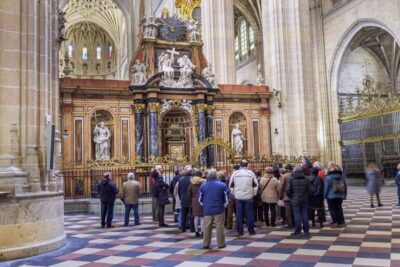
Browse the lists this tour appears in