
Reviewed · MADRID BIKE TOURS
Madrid: Street Art Bike Tour
Madrid’s street art is more than paint on walls. On this bike tour, a local graffiti artist connects the work you see in Malasaña and Lavapiés with the people and movements that shaped it, from a preserved 1989 tag to today’s community art spaces.
I like two things in particular: you get both the close-up view of festival art and the broader feel of the neighborhoods around it, and your guide can explain techniques and local context as you go. The trade-off is that city cycling skills matter: you’ll ride in Madrid traffic and face one uphill stretch.
- Muelle’s 1989 tag gives you a rare look at Madrid’s early graffiti movement.
- Malasaña’s Pinta Malasaña works show how a neighborhood festival turns everyday street fixtures into art.
- Boa Mistura’s work introduces a Madrid crew with projects around the world.
- Solar Antonio Grilo and Esto es una Plaza reveal how street art shares space with community gardens.
- Bike, helmet, and lock rental are included, and the ride ends where it starts.
A street-level route through Madrid’s changing neighborhoods
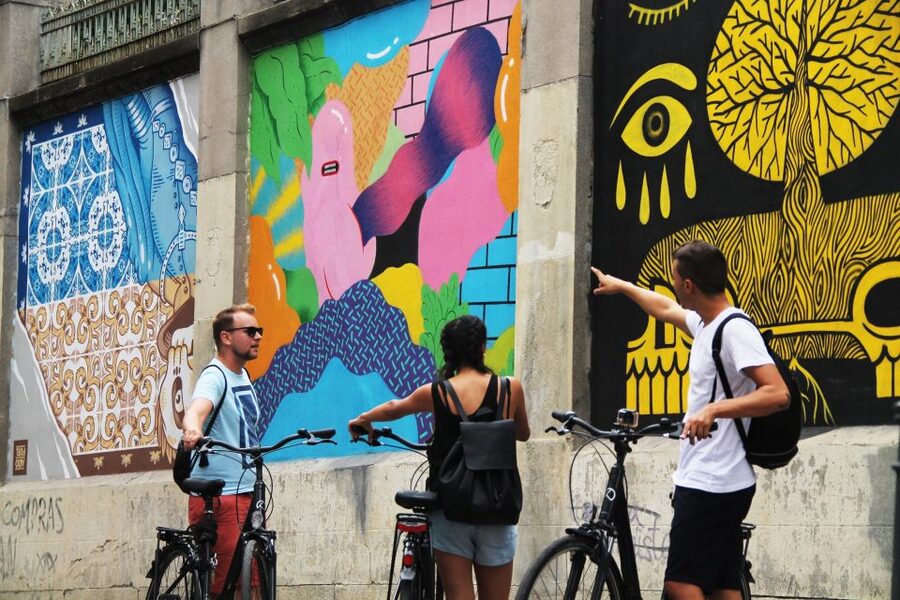
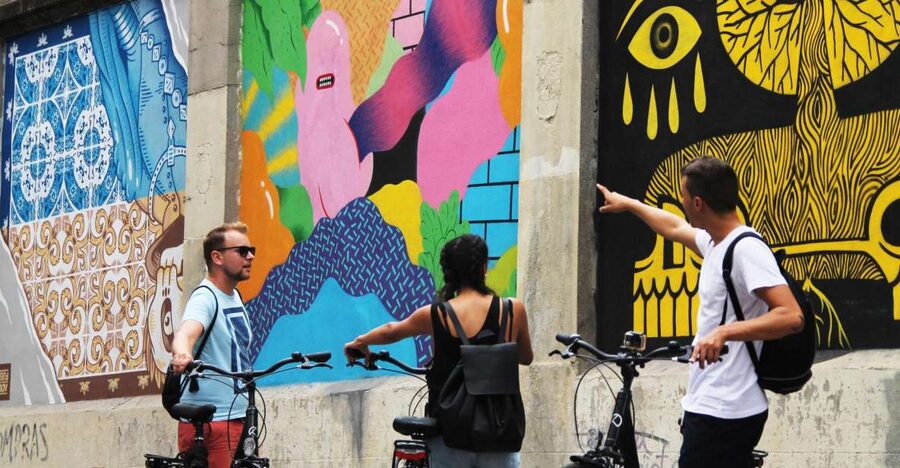
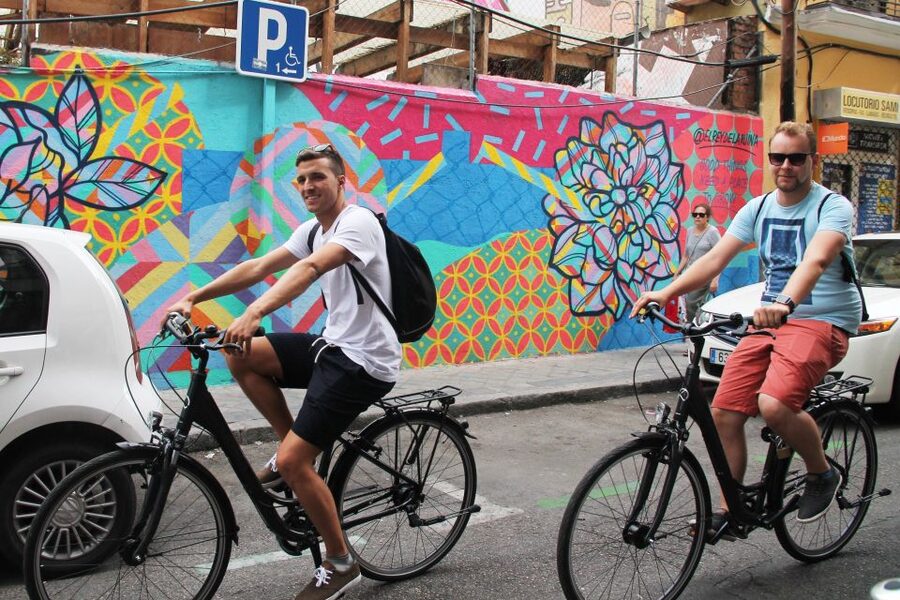
This 2.5-hour ride is a practical way to see how street art lives in the city rather than being gathered in one museum or gallery. You move between neighborhoods, stopping to look at work on walls, metal shutters, and other parts of the urban environment. A local graffiti artist leads the way and explains both the art and the methods used to make it.
The tour focuses on Malasaña and Lavapiés, with nearby stops along the route. That matters because the work is tied to its setting: festival pieces appear among neighborhood streets, while community art shares space with gardens made by and for local residents. You get a sense of Madrid’s urban culture as well as a string of murals.
The listed duration is 2.5 hours, though the practical information also calls it a three-hour, medium-level activity. I’d leave a little room in your schedule rather than plan a tight connection afterward. Starting times depend on availability.
From Muelle’s tag to Madrid’s graffiti beginnings
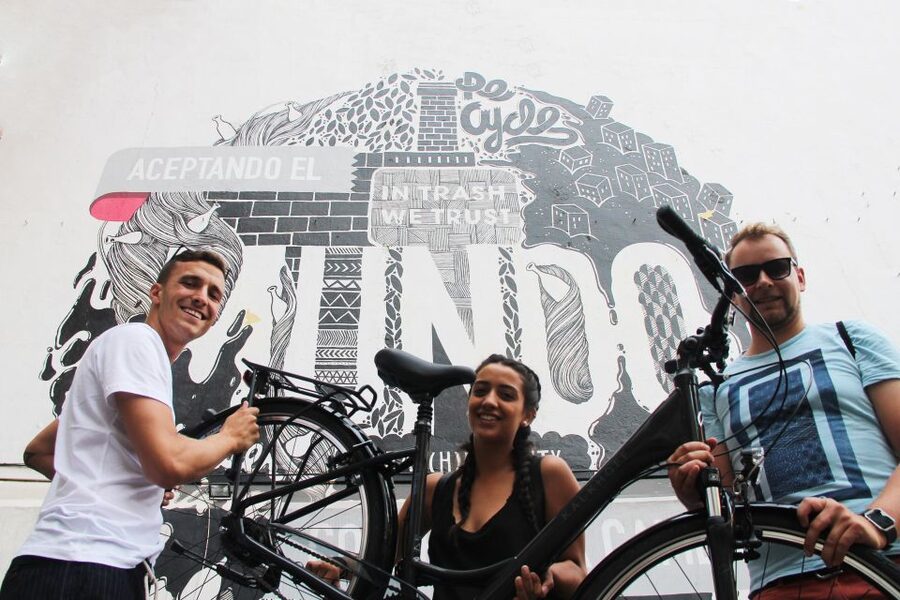
The tour introduces the history of street art in Madrid, including the city’s early graffiti scene. One of the most striking details is Muelle, whose name means spring, and a tag dating to 1989 that remains preserved. It anchors a broad cultural story in one specific mark on a city surface.
Muelle was a young participant in the movement as it took shape. Seeing a surviving tag helps you understand that graffiti here is not only a recent decorative trend. It has its own local history, and the guide can explain how artists began using city walls and other surfaces to make their presence known.
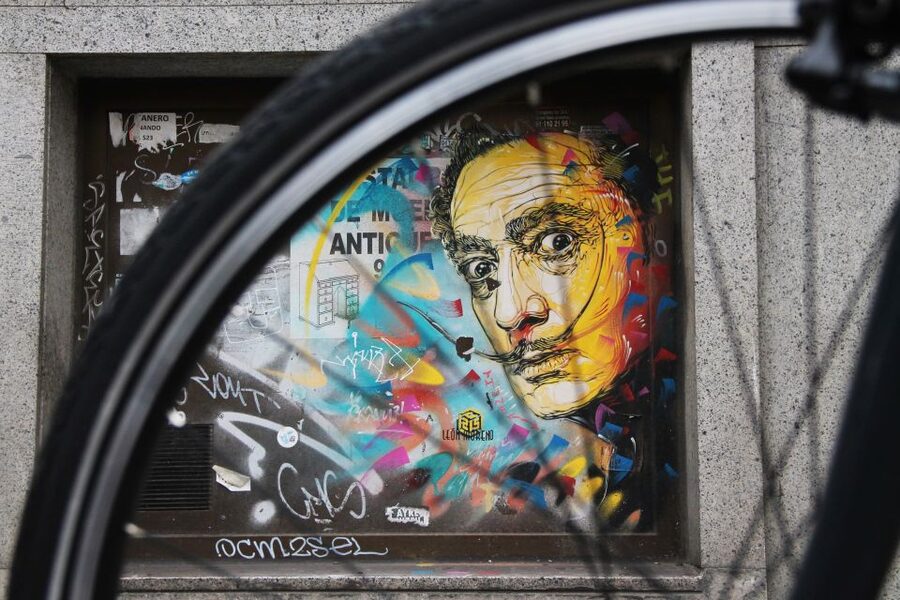
You’ll also hear about techniques used to decorate walls, metal shutters, and other urban features. That makes the stops more engaging than a simple hunt for colorful backdrops. You can look at how work is made and where artists choose to put it, while your guide supplies the context that a quick photo stop would miss.
More bike tours around Madrid:
- Madrid Highlights Bike Tour
★ 5.0 · 1,731 reviews - Best of Madrid: 3-Hour Guided Bike Tour in Small Groups
★ 4.8 · 1,417 reviews - Madrid: Highlights Guided Vintage Bike Tour and Tapas Option
★ 4.9 · 962 reviews
Boa Mistura and the route toward Alonso Martínez
After the opening portion and a bicycle safety briefing, the route heads toward Alonso Martínez. Here you’ll see the first photographed piece by Boa Mistura, a crew born and raised on Madrid’s outskirts. Their work has reached projects around the world, and they are also regarded as one of Spain’s important design agencies.
This stop offers a useful contrast with the smaller tags and festival pieces. It shows how street-based practice can connect with broader design work, while keeping its roots in the city. Your guide can help you read the piece as more than a patch of color: who made it, what kind of work the crew does, and how Madrid artists have developed beyond their home streets.
The route is still a bike tour, so expect to keep moving between locations rather than linger for a long time at each one. If you like studying every detail at length, you may want to note the names of artists and return on foot later. The ride’s advantage is range: in a few hours, you can connect several neighborhoods and approaches to public art.
Malasaña’s Pinta Malasaña festival works
In Malasaña, you’ll see work by Spanish artists who took part in the 2017 edition of Pinta Malasaña. The festival colors the neighborhood during April, with Plaza Dos de Mayo at its center. The tour brings you to festival interventions that can be easy to miss if you are walking past without knowing what to look for.
One memorable example is Bolardo Voy, Bolardo vengo, a colorful display using traffic elements. It makes a good point about street art: the canvas need not be a blank wall. Ordinary pieces of city infrastructure can become part of the artwork, changing the way you notice the street around you.
Malasaña is described as one of Madrid’s trendier, more hip neighborhoods, and the art gives you a reason to look beyond its cafés and shops. You’ll see how a festival can leave visible traces in a neighborhood and how those traces fit into daily life. The specific pieces you encounter may depend on what remains visible, but the route is built around works from that festival edition.
Lavapiés gardens where art serves the community
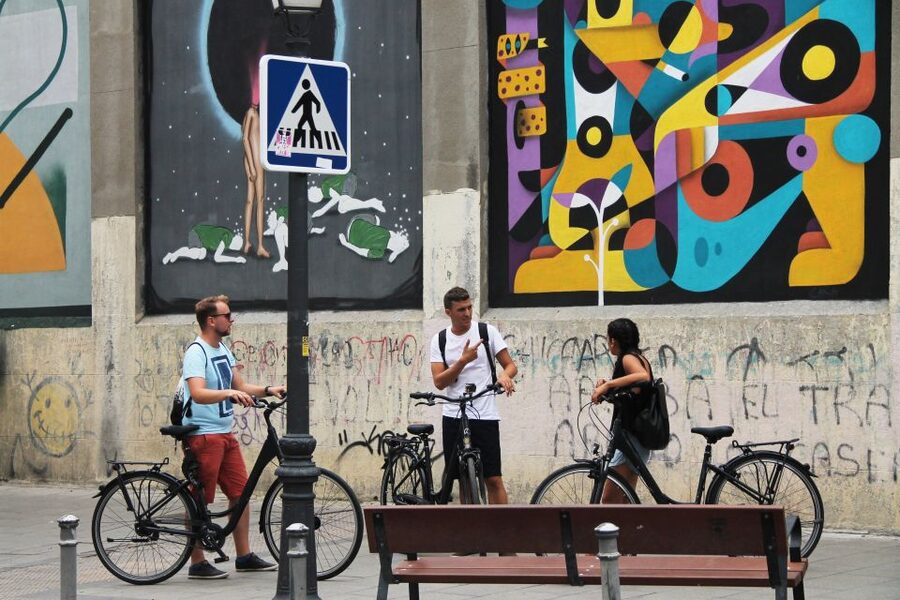
The ride also visits Solar Antonio Grilo and Esto es una Plaza, two community hubs in the Lavapiés and Noviciado areas. Both were once abandoned places and have been reshaped into urban gardens, with street art as part of the environment. Their value is not just visual: they are examples of local communities making use of shared space.
These stops give the tour a different emphasis from the festival art. Here, art is part of a place created for residents, not simply a piece to view and move on from. The gardens are described as examples for other communities interested in hybrid economy systems, so the guide can connect the design of a space with the way people organize and use it.
Artists represented in these areas include El Rey de la Ruina, Cassassola, Ze Carrión, and Por Favor, among others. If you are interested in the names and styles behind the work, this is a good stretch to listen closely and ask questions. The tour’s strength is having a working graffiti artist as guide, who can explain the scene from a maker’s point of view.
More street art walks around Madrid:
- Madrid: Street Art Tour with Local Graffiti Hunter
★ 4.8 · 270 reviews - Street Art Guided Tour in Madrid
★ 5.0 · 175 reviews - Madrid Hidden Street Art Tour
★ 5.0 · 12 reviews - Madrid: Hidden Street Art Tour
★ 5.0 · 11 reviews
What cycling in central Madrid asks of you
The tour includes a safety briefing before you set off, and the bike, helmet, and lock are provided. The route is described as medium level, with one uphill section. That sounds manageable for someone comfortable riding a bike, but the urban setting is the bigger consideration: one participant found traffic and some uphill stretches challenging for less confident cyclists.
I’d book this if you are at ease riding in city streets and can pay attention to traffic while following a group. The guide may adjust the ride to accommodate different abilities, but you’ll get more from the experience if cycling itself does not take all your focus. Comfortable shoes are advised, and you should bring a passport or ID card.
Families can consider the tour, too. A seven-year-old rode independently on one family outing, and the guide was described as friendly and experienced with the family. That is encouraging, but it is not a stated minimum age or a guarantee that every child will find the route easy. Use your own judgment about your child’s city-cycling confidence.
Is $46 a fair price for this ride?
At $46 per person, the fee covers the bicycle, helmet, lock, city map, and a live guide in English or Spanish. You also get a restroom break. Beverages are not included, so bring money if you expect to want a drink along the way.
The value rests mostly on the guide and the route. Renting a bike on its own would not give you the same introductions to Muelle, Boa Mistura, Pinta Malasaña, and the Lavapiés gardens. The guide’s knowledge of graffiti techniques and local artists is central to understanding why these works matter and how they fit into Madrid’s recent cultural life.
This is a good use of a half-day if you want a guided activity with a local focus, especially if you’ve already seen the major sights or want a break from formal attractions. If you prefer to explore at your own pace, or are not comfortable cycling in traffic, the price may be harder to justify. You could still visit some of these areas on foot, but you would lose the artist-led explanations and the convenience of covering several stops by bike.
Meeting point, language, and booking details
The tour starts at the entrance to the Carrefour Express at C/Montera 32, near Gran Vía and Sol metro stations. It ends back at the same meeting point, so you do not need to plan onward transport from another neighborhood.
Live guiding is available in English or Spanish. Javier has led a family outing, but the specific guide is not guaranteed, so treat the guide’s name as an example rather than a promise. The activity offers free cancellation up to 24 hours in advance, and you can reserve now and pay later.
Should you book the Madrid street art bike tour?
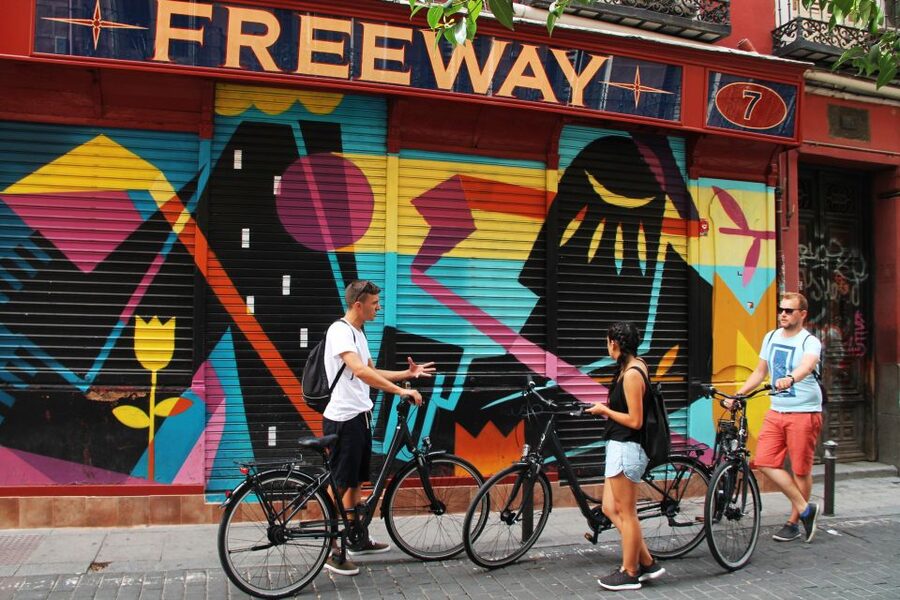
Book it if you want more than a mural checklist: the best part is the link between Madrid’s early graffiti, festival art, and community-run spaces. I’d especially recommend it to curious city cyclists who enjoy hearing from an artist and want to see Malasaña and Lavapiés through their public art.
Think twice if traffic makes you nervous or if you want a slow, highly flexible visit at every stop. For confident riders, the mix of Muelle’s preserved tag, Boa Mistura, Pinta Malasaña, and Lavapiés gardens makes this a worthwhile way to spend a few hours. For families, it can work with a child who is genuinely comfortable riding in a city, but the route is not a substitute for assessing that comfort yourself.
FAQ
How long is the Madrid street art bike tour?
The stated duration is 2.5 hours. The practical information also describes it as a three-hour activity, so allow some extra time in your plans.
Where does the tour start and end?
It starts at the entrance to the Carrefour Express at C/Montera 32, near Gran Vía and Sol metro stations. It ends back at the same place.
What languages are available?
The live guide is available in English or Spanish.
Is a bicycle included?
Yes. Bike rental, a helmet, and a lock are included, along with a Madrid city map.
What should I bring?
Bring comfortable shoes and a passport or ID card.
Is the ride suitable for someone who is not confident cycling in a city?
The activity is described as medium level and includes one uphill section. The route also involves Madrid traffic, so you should be comfortable cycling in an urban setting.
Just added in Madrid
- Prado and Reina Sofia Museums Private Tour★ 5.0 · 6 reviews
- Prado Museum and Royal Palace Private Tour★ 5.0 · 18 reviews
- Prado Museum VIP Tour with Drinks & Tapas★ 5.0 · 4 reviews
- Prado Museum and Royal Palace Private Tour in Madrid★ 5.0 · 3 reviews
- Prado Museum Private Tour★ 5.0 · 62 reviews
- Prado Museum and Reina Sofia Museum Private Tour★ 4.5 · 6 reviews
- Visita privada al Museo del Prado★ 5.0 · 34 reviews
- Prado Museum Private Tour with Tickets Included★ 5.0 · 3 reviews
Madrid Bike Tours, compared.

Best of Madrid: 3-Hour Guided Bike Tour in Small Groups
Read our review →
Highlights Guided Vintage Bike Tour and Tapas Option
Read our review →
3 hour Guided Highlights Bike Tour with Optional Tapas
Read our review →
Madrid City Guided Bike/E-Bike Tour for Small Groups
Read our review →

Browse the lists this tour appears in