
Reviewed · RETIRO PARK TOURS
Madrid on foot: From Debod to Retiro
Madrid on foot, from an Egyptian temple to a park-side palace of glass, is a fine way to see how many faces the city can show in three hours. This small-group walk links landmark Madrid with quieter old-town lanes, while a cultural mediator supplies the stories that make the buildings more than scenery.
I like two things in particular: the route connects major sights instead of keeping you in one neighborhood, and the group is limited to seven people, which should make it easier to hear and ask questions. The tour also takes in details you might otherwise pass by, from Quevedo’s old walking route to a statue whose construction involved Galileo.
The trade-off is the pace and physical demand. This is a long, three-hour walk across central Madrid, and it is listed as unsuitable for people with mobility impairments, low fitness, children under eight, babies under one, and people over 70. Also, the advertised finish is Retiro Park, while the meeting details say the activity ends back at the starting point, so confirm the exact finish before booking.
Key points before you book
- Start at Plaza de España: Meet in front of the Cervantes monument, then begin with the question of why Madrid has an Egyptian temple.
- See central Madrid in one continuous walk: The route links the Royal Palace, old-town lanes, Plaza Mayor, Puerta del Sol, Calle Alcalá and Retiro.
- Keep the group small: No more than seven participants join the walk, with a live guide in English or Spanish.
- Expect stories, not just façades: Subjects include Quevedo, the Royal Theater, the Almudena Cathedral and Madrid’s famous old restaurant.
- Allow three hours on your feet: Comfortable shoes and clothing suited to the weather are recommended.
- Check the finish point: The route description ends at Retiro Park, but the meeting information also says the tour ends at the meeting point.
From Cervantes to the Temple of Debod
The walk begins in Plaza de España, in front of the monument to Miguel de Cervantes. It is a practical place to start a city tour: the guide can introduce the route and Madrid’s cultural characters before leading you toward the first unusual stop, the Temple of Debod.
The temple gives the tour an early conversation piece. Rather than opening with another royal façade or grand square, the guide asks why an Egyptian temple stands in the middle of Spain. That question sets up the kind of walk this is: a string of famous sights, joined by stories and curiosities that help you look more closely.
The tour details do not spell out the temple’s full story, so treat this as an introduction rather than a promise of an extended history lesson on Debod. Its value is also practical. You start with a landmark that feels unlike the streets ahead, then move into the royal and medieval center with a fresh sense of how varied Madrid can be.
More Retiro Park tours around Madrid:
- Madrid Walking Tour from Puerta del Sol to Retiro Park
★ 5.0 · 2,285 reviews - Madrid: Iconic Retiro Park Segway Tour
★ 4.9 · 848 reviews - Madrid Private Segway tour. Retiro Park – Centro Historico
★ 4.9 · 636 reviews
Royal Madrid, from palace to theater
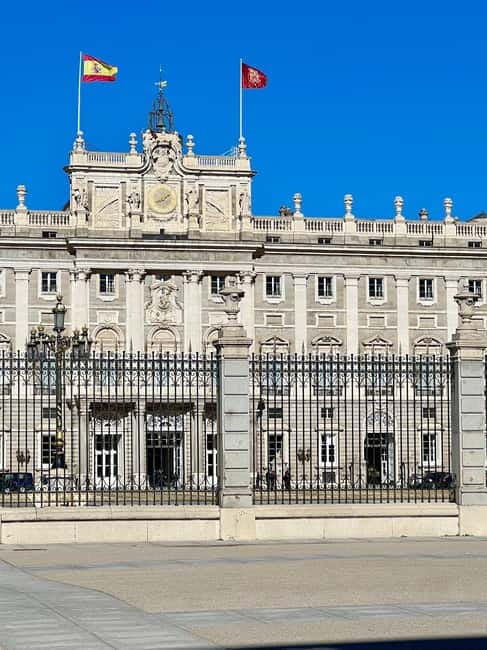
From the temple, the route turns toward the Royal Palace, described as the largest palace in Western Europe and the official residence of the monarchy. The guide discusses the palace alongside the Almudena Cathedral and the Royal Theater, giving you a useful set of landmarks to understand together rather than as separate photo stops.
This is one of the route’s strongest stretches for first-time visitors. The palace and cathedral are among the city’s most prominent sights, and a guide can help you distinguish their roles and place them in the wider story of Madrid. You should not assume that the tour includes entry to any of these buildings. The experience is described as a walking tour, and entry tickets are not listed as included.
The Royal Theater brings a lighter touch. The guide explains the expression Mucha m!, a theatrical good-luck phrase, and connects it to the city’s performance culture. There is also a statue whose construction involved Galileo Galilei. That is a wonderfully specific detail to watch for, though the tour information does not identify the statue by name.
These short stories can be more useful than a string of dates. You come away with a few details that help the city stick in your memory, and you have something to notice if you return to the area on your own.
Madrid de los Austrias and the lanes around Plaza Mayor
The walk then enters Madrid de los Austrias, the old quarter associated with the city’s Habsburg-era past. Here, the route shifts from grand civic landmarks to lanes and small details. One stop is a curious neighbor who looks toward the foundations of the old Almudena. Another is Calle del Codo, linked to the writer Quevedo, who used to walk there.
This part should appeal to anyone who likes the texture of a city as much as its headline sights. The streets offer a change of scale after the palace: you are no longer looking only at monumental architecture, but at the smaller features and local stories that a hurried walk might miss. The guide’s role matters here. A name like Quevedo or a reference to old foundations makes a narrow street more than a shortcut.
The route continues to Plaza Mayor, a square with more than four centuries of history. Its past includes markets, fires and memories of war, and the guide also points out a restaurant described as the oldest in the world. The square is an obvious place to pause and take in Madrid’s public life, but the tour does not specify a meal stop or time to sit down. Think of it as a story-rich landmark on a moving route, not a dining experience.
There is a lot to cover in three hours, so you may need to listen while walking rather than linger at every corner. If you prefer long stops, photographs and time inside buildings, this tour may feel brisk. If you want a broad orientation and a guide’s thread connecting the sights, the pace makes more sense.
Puerta del Sol and the streets toward Gran Vía
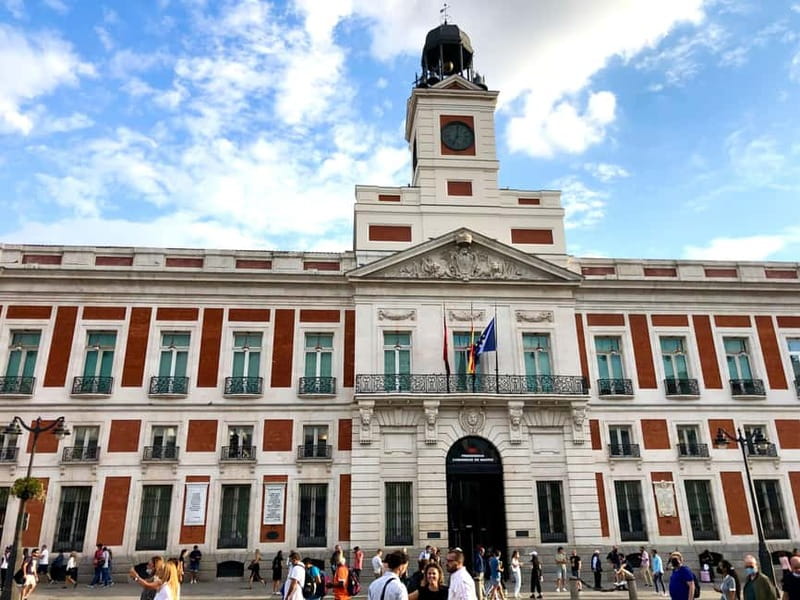
Puerta del Sol is described as the heart of Madrid, and the route goes in and out of the square several times by way of streets connecting it with Gran Vía. This gives you more than a quick pass through a central landmark. You get a sense of how Sol links the city’s main arteries and how the streets around it feed into the larger urban pattern.
The repeated crossings may be useful if you are trying to get your bearings for later independent exploring. Sol is a natural point to remember when navigating central Madrid, and the tour’s movement between it and Gran Vía helps place the two areas in relation to each other. Do not expect a long stop at every adjoining street, though. The stated duration covers a route stretching from Plaza de España to Retiro.
For a visitor with only a short stay, this section has clear value: you see the city center as a connected place rather than a collection of isolated attractions. For someone who already knows Sol and Gran Vía, the interest will depend more on the guide’s stories than on the landmarks themselves.
A few more tours around Madrid worth booking
- Madrid: Tour Bernabéu Entry Ticket
★ 4.5 · 21,573 reviews - Madrid: Prado Museum Entry Ticket
★ 4.6 · 17,509 reviews - Madrid: Royal Palace Fast-Access Admission Ticket
★ 4.6 · 13,856 reviews - Madrid: “Emociones” Live Flamenco Performance
★ 4.8 · 12,866 reviews
Calle Alcalá, Cibeles and the approach to Retiro
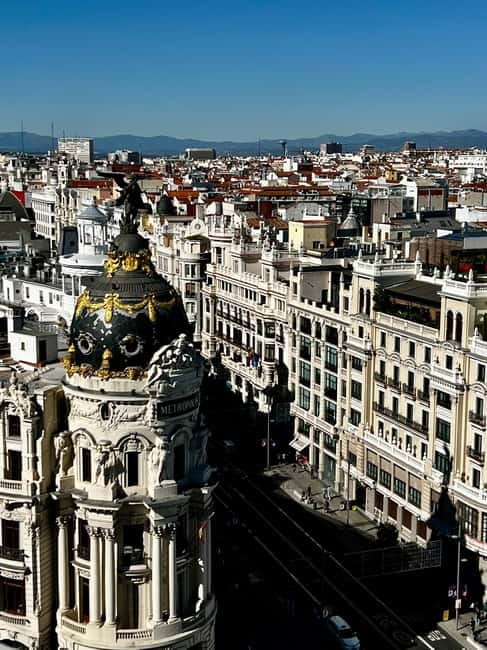
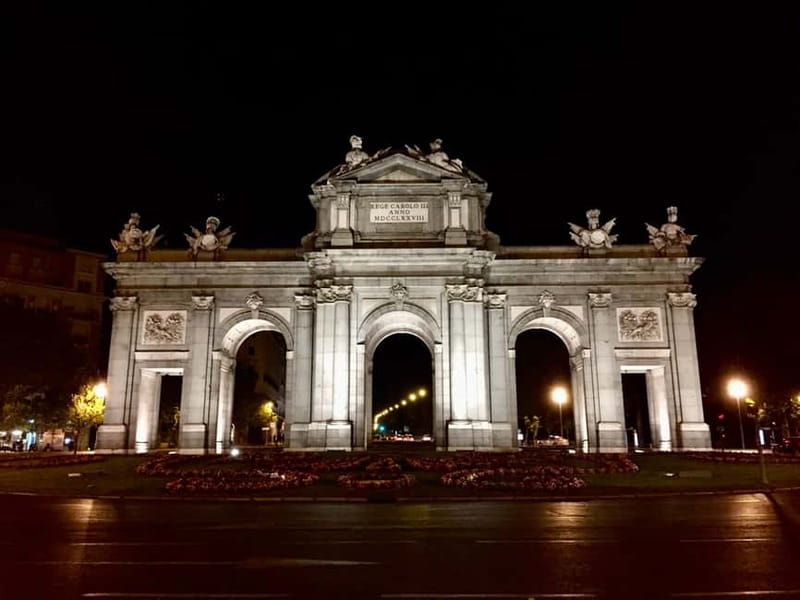
Leaving the central streets, the walk follows Calle Alcalá. Along the way, it passes the Círculo de Bellas Artes, the Banco de España, the Cibeles fountain and palace, and the Puerta de Alcalá. The guide makes a point of distinguishing the real Banco de España from the one shown in La Casa de Papel*, a bit of pop-culture shorthand that should help clarify which building you are looking at.
This is a satisfying stretch for anyone who wants a broad architectural sampler. The route brings together an arts institution, a major financial building, a fountain and palace, and one of Madrid’s best-known gates. The tour information does not promise visits inside, so expect to see these places from the street and hear about them as you walk.
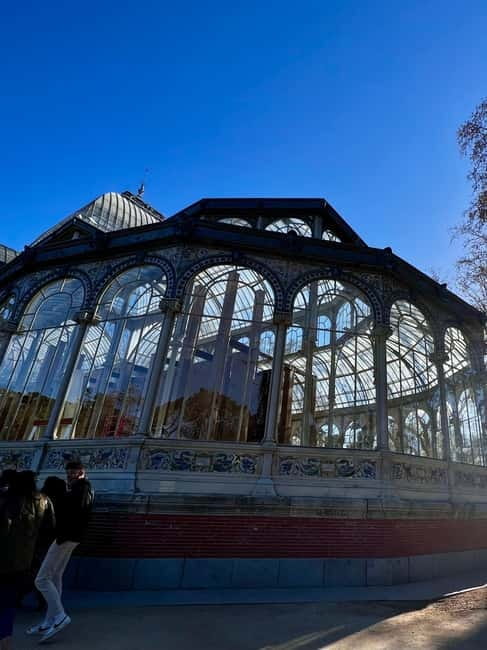
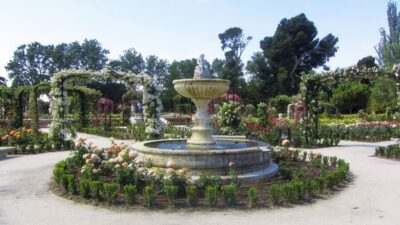
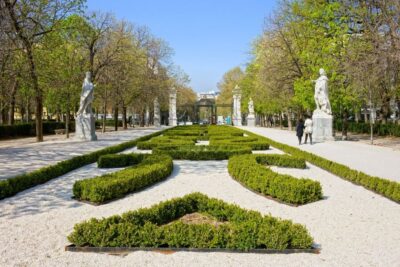
The Puerta de Alcalá makes a fitting marker before the final change of scenery. From there, the walk ends in Retiro Park, where the listed sights include the ponds, the Palacio de Cristal and the Ángel Caído. The park’s open space offers a contrast to the crowded central streets and grand avenues you have crossed.
The final stretch is a strong reason to choose this route over a tour confined to the historic center. You get the old town and major institutions, then finish among park paths and landmarks. But the endpoint needs checking: the route description says Retiro, while the meeting information says the activity ends back at the meeting point in Plaza de España. Since those are not the same place, ask the provider to confirm where the group actually finishes before you plan onward transport or a nearby meal.
What three hours and $28 buy you
At $28 per person, the price is reasonable for a guided walk covering this many distinct areas, especially with a group capped at seven. You are paying for a live guide, a route that links central sights, and explanations that can make small details more memorable. The value is strongest if you are new to Madrid and want a useful overview before exploring on your own.
It is less compelling if you want building entry, a meal, or extended time at each stop. None of those is specified as part of the experience. The tour is about covering ground and giving context as you go, so your return is an organized introduction rather than a set of interior visits.
The small group is a meaningful feature at this price. With at most seven participants, you should have a better chance of hearing the guide and asking questions than you would in a large walking group. The guide is available in English or Spanish. No individual guide’s name is provided, so if you have a preferred language, check the selected departure details before booking.
The tour is rated five out of five, with four ratings. The most consistent praise is for the route’s breadth and the guide’s manner: one French-speaking participant called the visit interesting, well-documented and very complete, while a Spanish-speaking participant described the guide as friendly and courteous. A family visit with an adult child also raised a useful point: age cutoffs can be a blunt fit for family situations. If you are booking with a family member near an age limit, check eligibility directly rather than assuming the rule reflects everyone’s ability.
Who will enjoy this walk, and who should pass
I would choose this tour if you want to see a large slice of Madrid in one outing, enjoy history and cultural details, and are comfortable walking for three hours. It suits first-time visitors who want an orientation, curious repeat visitors looking for lesser-noticed stories, and anyone who prefers a guide to connect the sights rather than simply follow a map.
It is not a good fit if you need a slow pace, have limited mobility, or find long walks tiring. The activity is specifically listed as unsuitable for people with mobility impairments and low fitness, as well as children under eight, babies under one, and people over 70. Those are clear booking considerations, not minor footnotes.
Wear comfortable shoes and season-appropriate clothing. Alcohol and drugs are not allowed. The provider offers free cancellation up to 24 hours in advance and a reserve-now, pay-later option, which can help if your Madrid plans are still taking shape.
Before confirming, ask one practical question: does the group finish at Retiro Park or return to Plaza de España? The answer affects where you go next, and the tour information gives both locations. If the finish is confirmed and the walking suits you, this is a useful, good-value way to meet Madrid through its monuments, lanes and everyday city connections.
FAQ
How long is the tour?
The walk lasts three hours. Starting times depend on availability.
How much does it cost?
The listed price is $28 per person.
Where does the tour start?
It starts in Plaza de España, in front of the monument to Cervantes.
Where does the tour end?
The route description ends in Retiro Park, but the meeting information says the activity ends back at the starting point. Confirm the exact finish with the provider before booking.
What languages are available?
The live guide is available in English or Spanish.
How large is the group?
The group is limited to seven participants.
What sights are included on the route?
The walk includes the Temple of Debod, Royal Palace, Almudena Cathedral, Royal Theater, Madrid de los Austrias, Plaza Mayor, Puerta del Sol, Calle Alcalá and Retiro Park, among other stops.
Is the tour suitable for children?
It is listed as unsuitable for children under eight and babies under one.
Is the walk suitable for people with mobility impairments?
No. The activity is listed as unsuitable for people with mobility impairments and people with a low level of fitness.
What should I bring, and can I cancel?
Bring comfortable shoes and wear clothing suited to the season and weather. You can cancel up to 24 hours in advance for a full refund.
Just added in Madrid
- Prado Museum and Royal Palace Private Tour★ 5.0 · 18 reviews
- Prado Museum VIP Tour with Drinks & Tapas★ 5.0 · 4 reviews
- Prado and Reina Sofia Museums Private Tour★ 5.0 · 6 reviews
- Prado Museum and Royal Palace Private Tour in Madrid★ 5.0 · 3 reviews
- Prado Museum Private Tour★ 5.0 · 62 reviews
- Visita privada al Museo del Prado★ 5.0 · 34 reviews
- Prado Museum and Reina Sofia Museum Private Tour★ 4.5 · 6 reviews
- Prado Museum Private Tour with Tickets Included★ 5.0 · 3 reviews
Retiro Park Tours, compared.


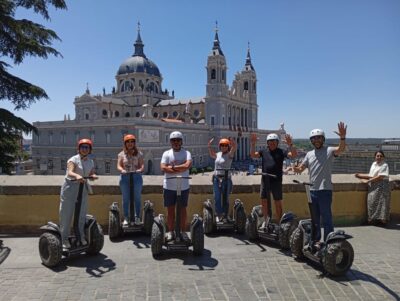
Madrid Private Segway tour. Retiro Park – Centro Historico
Read our review →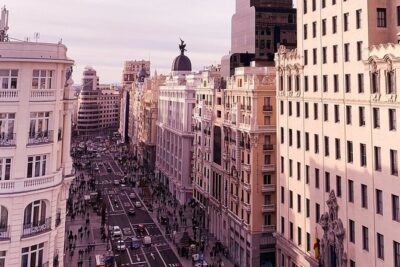
Magical and Iconic Retiro Park Segway Tour in Madrid
Read our review →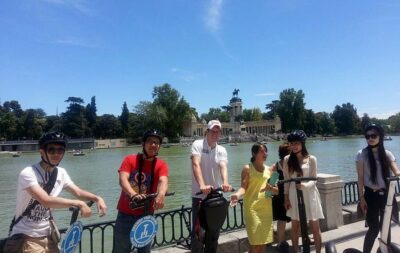

Private Segway Tour Retiro Park for 1, 1.5 or 2 hrs.
Read our review →Browse the lists this tour appears in