
Reviewed · ROYAL PALACE OF MADRID TOURS
Madrid: Guided Tour of the Royal Collections Gallery
The Royal Collections Gallery tells Spain’s royal story through objects made for use, display, and ceremony. In two hours, you move from a portrait of Queen Isabella I to Velázquez’s The White Horse, armor associated with Charles I, Bourbon-era furnishings, and the archaeological remains of Islamic Mayrit beneath the museum.
I like the chronological route, which gives the collection a clear shape, and the mix of art and everyday royal objects. A carriage, clocks, tapestries, and wartime photographs offer a different view of court life than paintings alone.
One consideration: two hours is a brisk introduction to a collection spanning several dynasties. If you prefer to linger over individual works, plan to return on your own after the guided visit.
Key points before you book
- Three dynasties set the route: The tour follows the Trastámara, Habsburg, and Bourbon periods.
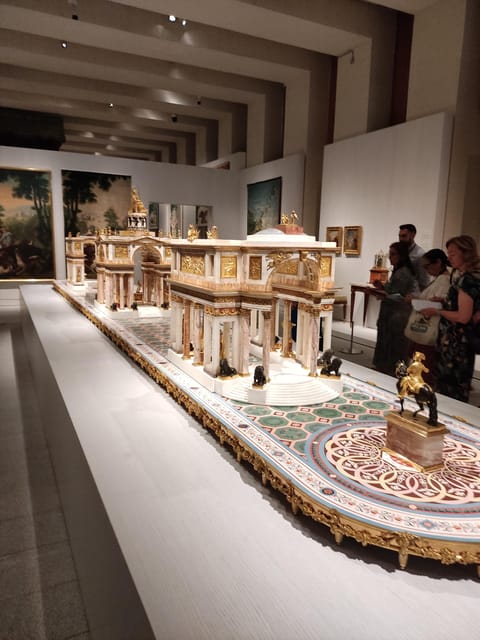
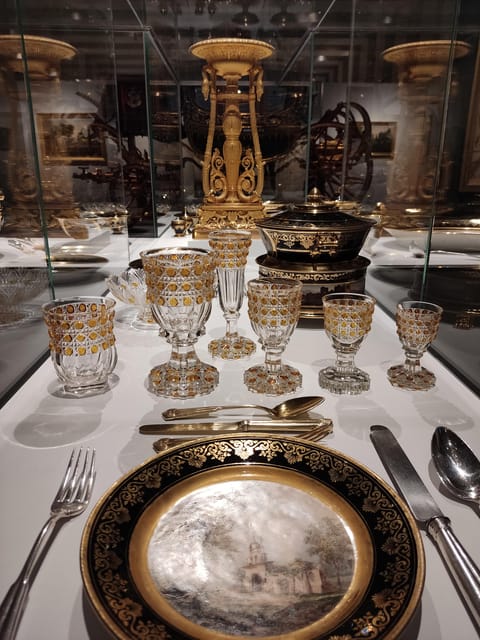
- Art shares space with royal possessions: Expect paintings and sculpture alongside armor, furniture, clocks, tapestries, and a 19th-century carriage.
- The basement adds an older layer: Archaeological remains of Islamic Mayrit were uncovered during construction of the gallery.
- A guide leads the two-hour visit: Live tours are offered in English and Spanish, with an audio guide in both languages.
- The ticket is included: The tour also uses a separate entrance to skip the line.
- Meet before the start: The meeting point is the Fun and Tickets office at Calle Mayor, 43, where you should arrive 20 minutes early.
A royal collection with a clear sense of time
Opened in June 2023, the Royal Collections Gallery presents objects preserved by Spain’s Crown across centuries. Its range is part of the appeal: this is not only a sequence of famous paintings, but also a record of how royal power was expressed through objects, decoration, and ceremony.
The tour arranges its visit chronologically, beginning with the Trastámara era and continuing through the Habsburg and Bourbon dynasties. That structure helps you connect works to the rulers who commissioned, owned, or used them. Rather than confronting a long list of objects without a guide, you get a thread to follow through the galleries.
At $69 per person, the experience is best judged as a guided introduction, not simply a museum ticket. The price includes admission and an official guide, as well as a separate entrance for the group. The value depends on whether you want someone to explain the historical links and help you make sense of a large collection in a limited time.
A single Spanish-language comment on the tour praised how clearly the visit was explained. That is a useful point to keep in mind: the collection spans several dynasties, so a clear account can help the objects feel connected rather than scattered. The guide’s name is not provided, so you cannot request a particular person.
More Royal Palace tours around Madrid:
- Madrid: Royal Palace Fast-Access Admission Ticket
★ 4.6 · 13,856 reviews - Madrid: Royal Palace Expert Guided Tour with Skip-the-Line
★ 4.7 · 6,986 reviews - Madrid Essential: Historic Center, Plaza Mayor & Royal Palace
★ 5.0 · 6,416 reviews
Meeting at Calle Mayor, then on to the gallery
The meeting point is the Fun and Tickets office at Calle Mayor, 43. Arrive 20 minutes before the start time, rather than cutting it close. The two-hour visit begins from this location and finishes at the main entrance of the Royal Collections Gallery.
The tour includes a separate entrance to skip the line. That can make the start more straightforward, though it does not mean every part of the gallery will be quiet or that you can move at your own pace. The guide sets the rhythm, which is useful if you want a structured overview and less ideal if you like to linger at each object.
Live tours are available in English and Spanish. An audio guide is included in both languages as well. The supplied details do not explain how the audio guide is used alongside the live explanation, so ask the provider if you have a preference or need to know how the two formats work together.
The Trastámara opening: a portrait of Queen Isabella I
The first chapter focuses on the Trastámara dynasty and Queen Isabella I, whose portrait is one of the early points on the route. Starting with a named monarch gives you an immediate anchor for the collection’s broader story. You are not simply looking at a portrait; you are beginning a sequence about how the Crown and its legacy changed over time.
This opening is brief compared with the later Habsburg and Bourbon sections, but it sets up the chronological approach. Pay attention to the guide’s explanation of the portrait and its place in the royal succession. The available details do not specify the portrait’s date, artist, or exact setting, so the guide is your best source for those points during the visit.
If royal history is new to you, this first stop helps establish who comes before the dynasties that occupy much of the tour. If you already know the period, use it to get oriented and save your questions for the objects that interest you most.
Habsburg rooms: tapestries, art, and the machinery of court
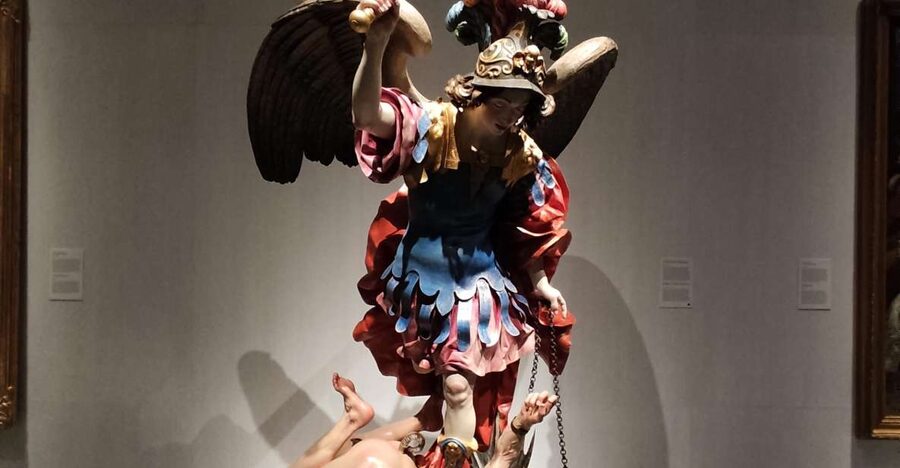
The Habsburg section covers the reigns of Charles I, Philip II, Philip III, Philip IV, and Charles II. The collection here includes tapestries, paintings, sculpture, and artifacts. That variety gives you a more complete picture of court life than a gallery devoted to paintings alone.
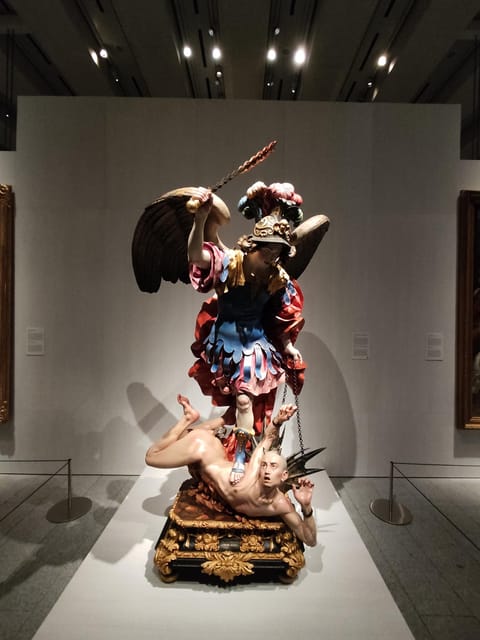
Two works have particular appeal. La Roldana’s sculpture shows the Archangel Saint Michael triumphing over the devil, a dramatic religious subject rendered as a three-dimensional work. Diego Velázquez’s The White Horse offers a different kind of presence: an image of a horse without a rider, described as an example of equine elegance.
The tour also includes horse and rider armor once worn by Charles I. It is a useful counterpoint to the paintings and sculpture. Armor makes royal status tangible, while the horse imagery nearby keeps the court’s relationship with riding and display in view. You can look closely at the workmanship, but the larger value is seeing how art, power, and ceremony sit side by side.
This is likely the section where the guide’s explanations matter most. The list of rulers is long, and the collection covers several generations. A guided account can help you keep the names and periods straight without turning the visit into a lecture on every reign.
More museum tours around Madrid:
- Madrid: Prado Museum Entry Ticket
★ 4.6 · 17,509 reviews - Madrid: Reina Sofía Museum Entrance Ticket
★ 4.5 · 6,889 reviews - Madrid: Small Group of Prado Museum Tour & Optional Tapas
★ 4.6 · 2,437 reviews - Madrid: Prado Museum Guided Tour with Skip-the-Line Ticket
★ 4.5 · 2,018 reviews
Bourbon rooms: furniture, clocks, and a royal carriage
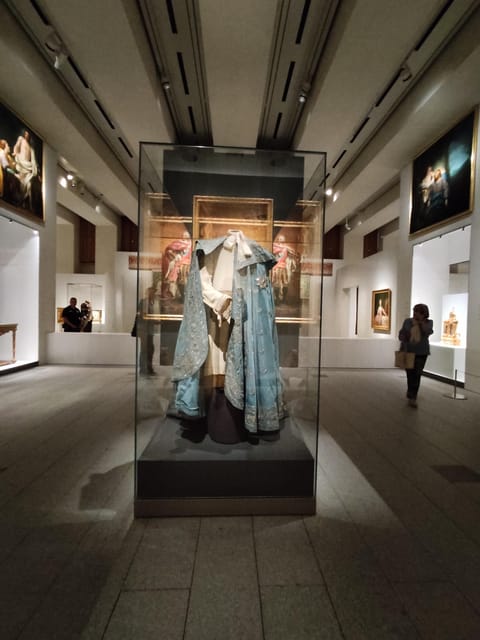
The Bourbon section covers a broad run of rulers, from Philip V and Louis I through Ferdinand VI, Charles III, and Charles IV, then on to Ferdinand VII, Isabel II, Alfonso XII, and Alfonso XIII. The collection includes furniture, clocks, tapestries, and paintings, with particular attention to the 18th century.
This change in material is welcome after the earlier focus on dynastic portraits, tapestries, and sculpture. Furniture and clocks bring the setting of court life closer to everyday use, while decorative objects show how royal taste could be made visible in a room. You do not need to be a specialist in furniture to appreciate the shift: the objects tell you something about how a court furnished and presented itself.
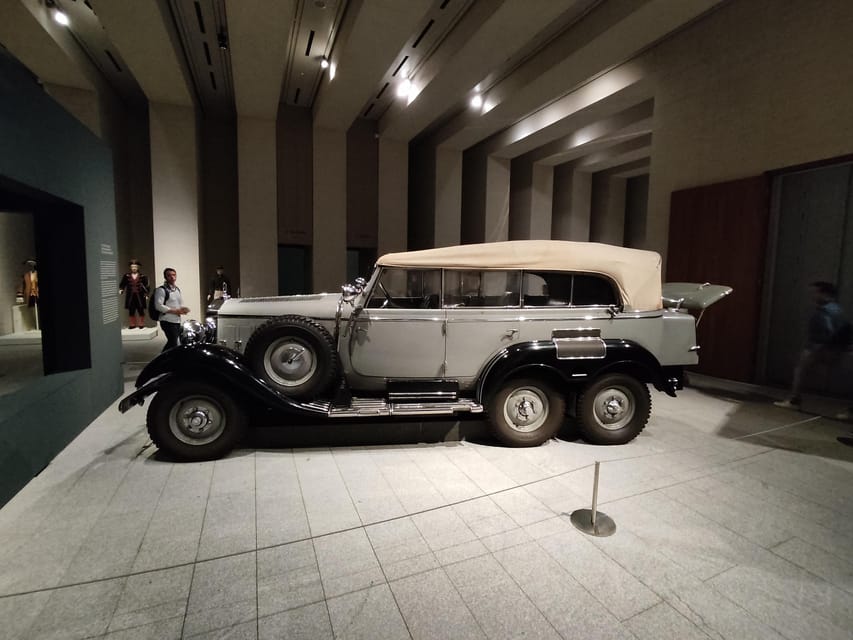
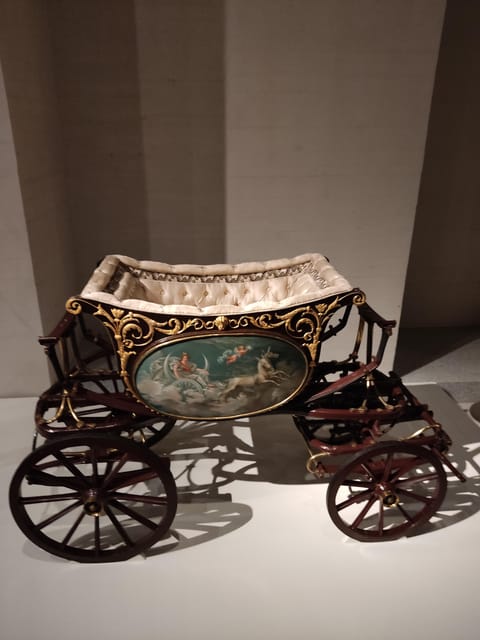
A 19th-century carriage is among the highlights. It gives you a large, practical object to compare with the smaller decorative works nearby. The tour also includes photographs connected to the Prisoners’ Office, established by Alfonso XIII within the Royal Palace during the First World War. These images introduce a different side of the monarchy: an office concerned with prisoners during wartime, rather than ceremony and display.
The Bourbon section has many rulers and a wide range of objects, so it may feel full. Two hours leaves limited time for close study, and the guide will need to keep the group moving. If the carriage or wartime photographs catch your attention, make a note of them. You may want to return to the relevant galleries after the tour, if time and your plans allow.
Beneath the galleries: Islamic Mayrit
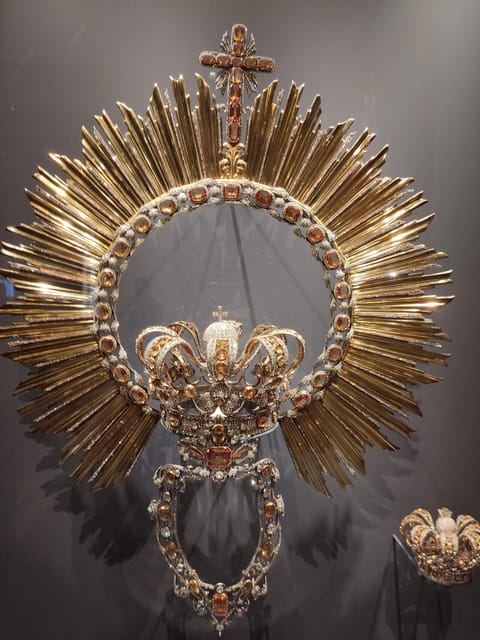
The final part of the visit reaches the basement, where archaeological remains of Islamic Mayrit were uncovered during construction of the gallery. This adds a much earlier chapter to the route, before the royal dynasties presented in the upper galleries.
The remains are a reminder that Madrid’s story did not begin with the Spanish Crown. Seeing archaeological material beneath a museum devoted to royal collections gives the tour a useful change of scale: from the possessions of rulers to evidence of an earlier settlement. The supplied details do not identify specific structures or artifacts, so expect the guide to explain what is visible rather than assume a particular set of remains.
For many visitors, this section will be a welcome contrast to the paintings and court objects. It also gives the tour a natural endpoint, linking the gallery’s modern construction with the older history it uncovered.
How the two-hour format affects your visit
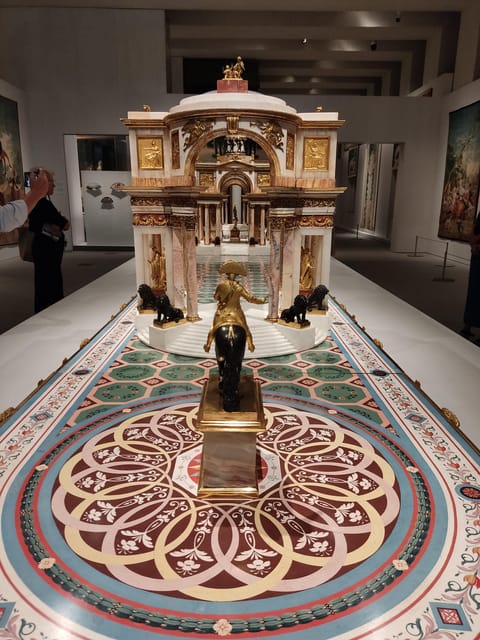
Two hours is enough for a guided overview of the main periods and named highlights, but it is not a leisurely visit to every object. You will cover a lot: the Trastámara opening, several Habsburg reigns, a broad Bourbon sequence, and the Mayrit remains. The benefit is a coherent route through an extensive collection; the trade-off is less time to stop wherever your interest takes you.
I would treat this tour as a first pass. Listen for the guide’s explanations of the major works and note the rooms or objects you want to revisit. That approach gives you both a historical framework and a short list for independent viewing afterward.
The experience may suit you particularly well if you have limited time in Madrid, enjoy seeing art in context, or want a guide to connect royal objects with the dynasties behind them. It is also a good fit if you appreciate more than paintings: the armor, carriage, clocks, furniture, and archaeological remains broaden the visit.
If you are a museum visitor who prefers quiet, unhurried looking, a guided group may not match your ideal pace. The separate entrance and included guide are real conveniences, but the visit remains a timed group experience. Consider booking if structure and explanation matter more to you than choosing every stop and setting your own pace.
Practical details that affect the decision
The tour costs $69 per person and lasts two hours. Admission to the Royal Collections Gallery and an official guide are included. Any service not specified as part of the itinerary is not included, so do not assume extra transport or other add-ons are covered.
You can reserve now and pay later, and free cancellation is available up to 24 hours before the visit for a full refund. The activity is listed as wheelchair accessible. Check available starting times before booking, and arrive at the Calle Mayor office 20 minutes early.
Should you book the Royal Collections Gallery tour?
Book this tour if you want a well-organized introduction to Spain’s royal collections, especially if you value a guide’s explanations and want to see how paintings, armor, furniture, and archaeological remains fit into a longer story. The route’s range is its main strength, and the separate entrance and included ticket add practical value to the $69 price.
Skip it if you mainly want to wander slowly, spend a long time with one artist, or avoid a fixed group pace. In that case, a visit on your own may suit you better. For a first encounter with the gallery, though, this two-hour route gives you a useful framework and several memorable stops to seek out again.
FAQ
How much does the tour cost?
The listed price is $69 per person.
How long is the guided visit?
The guided tour lasts two hours.
Where is the meeting point?
Meet at the Fun and Tickets office at Calle Mayor, 43.
How early should I arrive?
Arrive 20 minutes before the visit starts.
Where does the tour finish?
The tour finishes at the Royal Collections Gallery’s main entrance.
Which languages are available?
The live guide is available in English or Spanish. The audio guide is also available in English and Spanish.
Is the gallery ticket included?
Yes. The ticket to the Royal Collections Gallery and an official guide are included.
Can I cancel, and is the tour wheelchair accessible?
You can cancel up to 24 hours in advance for a full refund. The activity is listed as wheelchair accessible.
Just added in Madrid
- Prado and Reina Sofia Museums Private Tour★ 5.0 · 6 reviews
- Prado Museum and Royal Palace Private Tour★ 5.0 · 18 reviews
- Prado Museum VIP Tour with Drinks & Tapas★ 5.0 · 4 reviews
- Prado Museum and Royal Palace Private Tour in Madrid★ 5.0 · 3 reviews
- Prado Museum Private Tour★ 5.0 · 62 reviews
- Visita privada al Museo del Prado★ 5.0 · 34 reviews
- Prado Museum and Reina Sofia Museum Private Tour★ 4.5 · 6 reviews
- Prado Museum Private Tour with Tickets Included★ 5.0 · 3 reviews
Royal Palace of Madrid Tours, compared.
Royal Palace Expert Guided Tour with Skip-the-Line
Read our review →
Madrid Essential: Historic Center, Plaza Mayor & Royal Palace
Read our review →
Madrid Old Town & Royal Palace Walking Tour Skip the Line Ticket
Read our review →
Royal Palace & Prado Museum Skip the Line Guided Tour
Read our review →
Guided Tour of the Royal Palace with Fast Access
Read our review →
Royal Palace Expert Guided Tour with Optional Tapas
Read our review →
Royal Palace of Madrid Small Group Skip the Line Ticket
Read our review →Browse the lists this tour appears in