
Reviewed · CUENCA TOURS
guided night tour
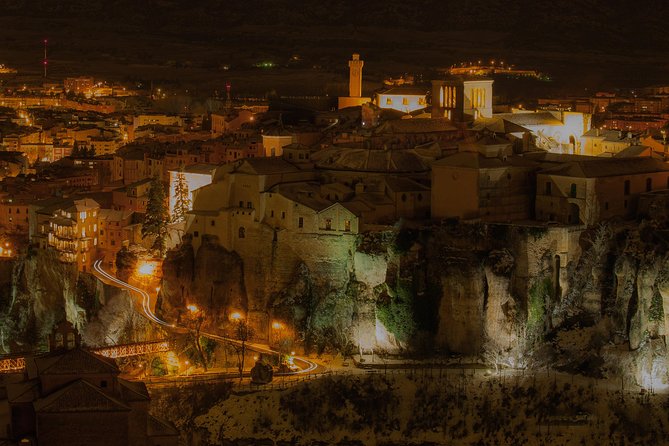
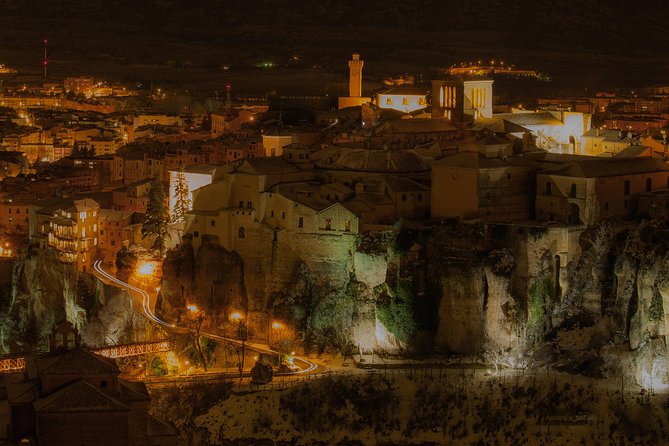
Cuenca’s old town changes character after dark. On this two-hour walk, you follow narrow historic streets past illuminated churches and the Casas Colgadas, with the gorge edges and steep-sided setting giving the city a striking nighttime profile.
I like two things in particular: the tour combines major sights with smaller historical details, and its evening timing lets you see familiar landmarks in a different light. It also works well as an orientation walk, giving you a route and context to build on during the day.
One thing to consider: Cuenca’s old center is hilly, with narrow lanes and some climbs. The walk is described as manageable, but it is still worth wearing comfortable shoes and being ready for uneven ground.
- The Casas Colgadas are the route’s dramatic finish: See Cuenca’s best-known buildings above the gorge, illuminated at night.
- The two-hour route covers several layers of the old town: From Plaza Mayor and the cathedral to castle ruins, churches and bridges.
- Guides bring the city’s details to life: Carlos, Guillermo and Hugo are among the guides named for their engaging explanations and local stories.
- The walk starts at 8:00 pm: A useful choice if you want to avoid the heat and crowds of a daytime visit.
- The price is about $9.88 per person: That is modest for a guided overview of the historic center.
- The group can reach 50 people: A large group may feel less intimate, especially in Cuenca’s narrow lanes.
Cuenca’s old town after sunset
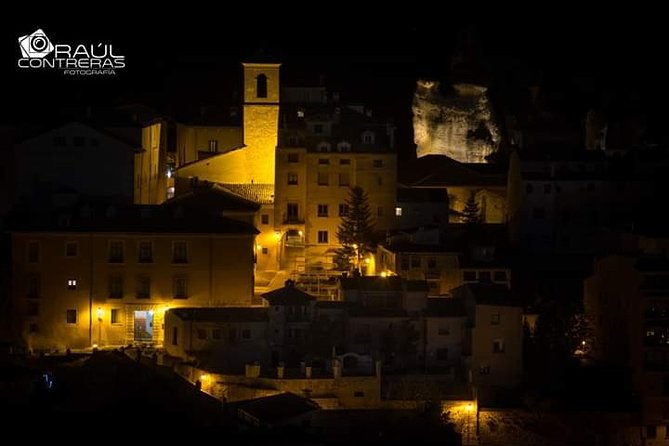
Cuenca is built on a narrow ridge between two deep gorges. In daylight, you can take in the cliffs, stone streets and houses perched over the drop; after dark, careful lighting gives those same landmarks a sharper outline. The city’s setting is part of the story, not just a backdrop.
This guided walk starts at 8:00 pm on C. Alfonso VIII, 1, close to the old center. Over about two hours, you move through historic streets and stop at key buildings and viewpoints. The route ends near the Casas Colgadas, at the Spanish Abstract Art Museum, making the famous overhanging houses a natural final scene.
I see this as a strong first-evening activity if you have limited time in Cuenca. The route gives you a sense of how the old center fits together, while the guide’s explanations help you notice more than the dramatic views. You can then return to the places that interest you at your own pace.
The tour is led in a group, with a maximum of 50 people. That size can mean less chance to ask a question during busy moments, and narrow streets may make it harder to stay close to the guide. The upside is a relatively low price for a guided walk through several of Cuenca’s central landmarks.
Plaza Mayor and the illuminated cathedral
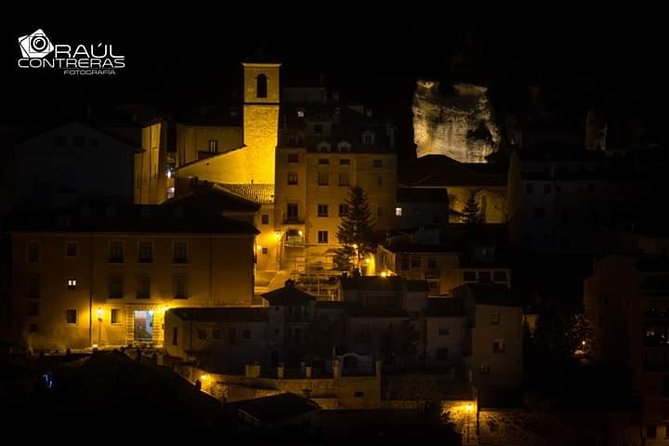
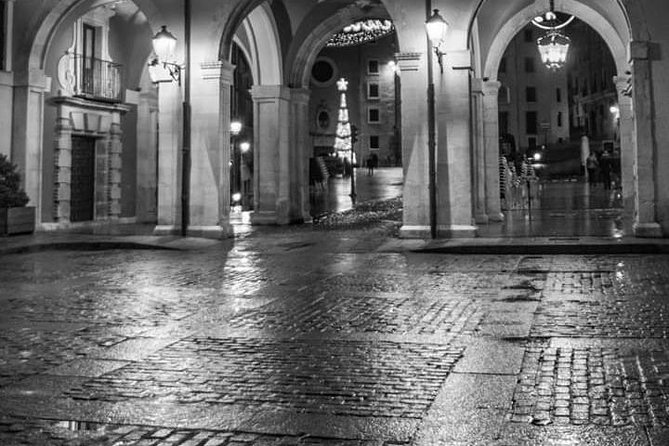
The route includes Plaza Mayor, the city’s central square, framed by colorful leaning houses and the lit facades of the cathedral and City Hall. This is one of the best places to grasp Cuenca’s visual character: buildings sit close together, the architecture varies from one facade to the next, and the square opens up a little after the tight lanes.
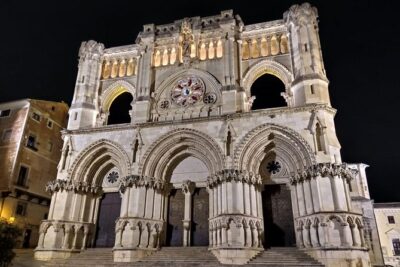
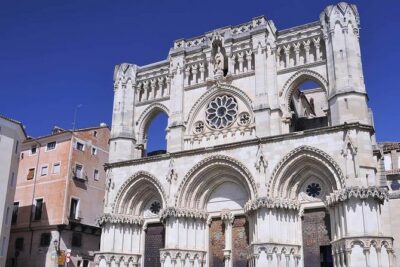
The cathedral gives the square its strongest architectural focus. Even from outside, its illuminated facade makes a striking impression, while the guide can put the building and surrounding streets into a historical context. The tour information does not specify an interior visit, so treat this as an exterior stop rather than a chance to explore the cathedral inside.
The square is also a practical point of orientation. If you are staying in the historic center, you will likely return to this area during your visit, and the guide’s route can help you recognize the lanes and landmarks around it. I like that the tour begins with a place that is easy to understand before the streets grow narrower and the history becomes more layered.
More after-dark tours around Cuenca:
- Night Walking Tour of Medieval Cuenca
★ 5.0 · 64 reviews - Enchanted Basin – Night Guided Tour
★ 5.0 · 34 reviews - Madrid by Night Small Group Tour: Stories, Sights and Tapas Bites
★ 5.0 · 1,956 reviews
San Pedro and the upper lanes
One stop is the Church of San Pedro, an octagonal church set on a limestone ledge. Its unusual shape and cliffside position make it more memorable than a quick pass by an ordinary church facade. Look at how the building sits in relation to the rock: in Cuenca, the terrain often seems to dictate the architecture.
The route also passes a former convent from the 17th century, associated with the Palace of D. Sebastián de Covarrubias. This is the sort of stop where a guide can add value beyond the view. A building’s earlier use, its former residents and its place in the city’s social life help explain why the old center is more than a collection of picturesque stone streets.
The guide names attached to this experience include Carlos, Guillermo and Hugo. The strongest praise for them centers on clear, engaging storytelling, humor and the ability to explain construction details in a way that makes the buildings easier to appreciate. That matters on a night walk: in lower light, you may not catch every architectural feature, so good commentary helps connect what you see with what you cannot readily inspect.
Castle ruins and the old Inquisition building
Cuenca Castle survives as 13th-century ruins in one of the narrowest parts of the historic center, between the two gorges. The remains mark the site of what was once the city’s first building. Even if the ruins are less visually complete than the cathedral or the hanging houses, their location makes them a useful stop for understanding how tightly the old town was built and defended.
The route also passes the former court of the Inquisition, later used as a prison until relatively recently. It sits high above the historic center on the edge of the Hoz del Huécar. Here, Cuenca’s history can feel less like a sequence of dates and more like a story shaped by power, confinement and the city’s difficult geography.
These stops suit visitors who want context as well as photographs. You will not get the same time to explore each site as you would on a private visit, but a guide can point out why a particular building matters and how it relates to the street plan around it. If you have already seen Cuenca by day, the nighttime setting can still make familiar places feel newly legible.
Casas Colgadas and the gorge
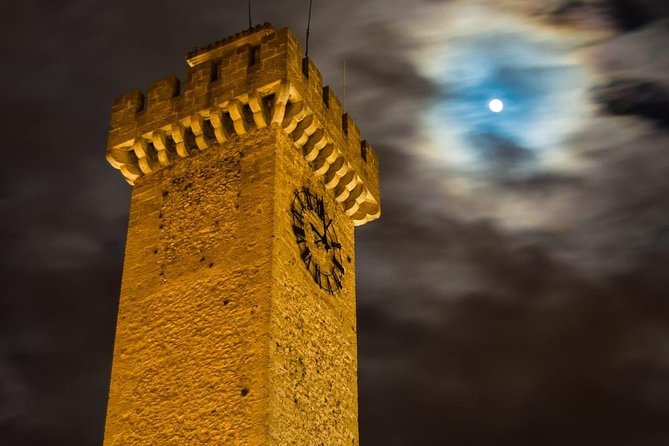
The Casas Colgadas, or Hanging Houses, are the symbol of Cuenca and the tour’s central visual draw. Their balconies project over the gorge, a bold feat of building that has endured for more than 600 years. At night, the lighting emphasizes their position above the drop and makes the contrast between the houses and the dark gorge especially clear.
The route ends at the Spanish Abstract Art Museum, located in the Casas Colgadas at C. Canónigos, 3. The endpoint puts you beside the city’s signature architecture, rather than requiring you to backtrack to the start. The museum itself is the named endpoint, but the tour details do not say that admission or an interior visit is included.
There is a practical benefit to seeing the Casas Colgadas with a guide before returning on your own. You can ask about how the houses were built and understand more about the structures than you might from a quick photo stop. The guide can also point out how the gorge and the old town’s layout shaped the city’s unusual appearance.
More guided departures around Cuenca:
- Monumental Basin Day Guided Tour
★ 5.0 · 67 reviews - Guided Walking Tour of Cuenca
★ 4.5 · 52 reviews - Guided tour: Cuenca + Cathedral
★ 5.0 · 28 reviews - Guided Tour – Medieval Basin + Monuments
★ 5.0 · 14 reviews
The iron bridge and Parador viewpoint
The route includes a stop at the bridge that replaced an older stone crossing. The present iron bridge dates to 1903, and the guide explains what happened to its predecessor and why it was replaced. This is a useful detail because Cuenca’s bridges are not just routes across a ravine; they reveal how the city adapted to the demands of movement and access.
From the bridge, the gorge becomes part of the experience in a more immediate way. You can look across to the rock face and see how buildings occupy the edges of the ravine. If heights make you uneasy, you may prefer to keep your attention on the guide and the architecture rather than the drop below.
The route also takes in the current Parador, a former religious building set on a rock at the edge of the ravine. Its lighting and position make it a memorable exterior stop. Together, the bridge and Parador help explain why Cuenca’s setting feels so unusual: the city is not simply near a gorge, it is arranged around one.
What the walk is like in practice
The tour lasts about two hours and is scheduled to start at 8:00 pm. That timing makes it a good fit for a warm day, when walking in the old center during the brightest hours may be less pleasant. It also gives you the chance to see the illuminated facades and viewpoints that are the main draw of a nighttime visit.
This is a walking tour, not a ride between attractions, and Cuenca’s historic center has slopes and narrow lanes. One account of the route describes it as not especially tiring, while another notes that nearby stairs can be hard work. Plan for some uneven ground and changes in elevation, and choose comfortable shoes rather than footwear meant only for a polished city pavement.
The maximum group size is 50. That is a fairly large group for a town with tight lanes, so arrive on time and stay near the guide if you want to hear the commentary clearly. The guide’s storytelling is one of the tour’s most valued features, and you will get more from it if you can follow the explanations rather than just the group’s movement.
The walk is offered by Cuenca Viajes. Confirmation is provided at booking, service animals are allowed, and the meeting point is near public transportation. Most people can participate, though the historic center’s slopes are worth keeping in mind if walking is difficult for you.
Is $9.88 good value?
At about $9.88 per person, the tour is a low-cost way to see a broad range of central landmarks with a guide. The value is not just the number of stops. It is the chance to connect the castle ruins, old churches, bridges and cliff-edge buildings into a story, instead of seeing them as separate photo opportunities.
The tour has a 4.9 rating from 176 reviews, with 98% recommending it. Those figures suggest a consistently well-liked experience, and the recurring strengths are specific: guides make the walk entertaining, offer useful historical detail, answer questions and help people notice the architecture. Carlos, Guillermo and Hugo are named as guides, with particular praise for their humor, clarity and ability to make the buildings easier to understand.
There are modest trade-offs. This is a group tour, so the guide’s attention is shared, and a group of up to 50 may feel crowded in narrow lanes. You also spend the whole tour on foot, and the timing and lighting may not suit anyone who prefers to see architectural details in daylight. If you have time, a daytime visit can complement the nighttime walk by showing the old town from another perspective.
The tour is commonly booked about 13 days in advance. That is an average, not a rule, but it is a sensible reason to reserve ahead if your schedule is fixed. You can cancel for a full refund up to 24 hours before the start time. Cancellations made less than 24 hours ahead are not refunded, and changes inside that window are not accepted.
Who should take this Cuenca night walk?
I would choose this walk if it is your first visit to Cuenca, you want an efficient introduction to the old center, or you are looking for a cooler alternative to daytime sightseeing. It is also a good choice if you enjoy hearing the stories behind buildings and want to see the Casas Colgadas at the hour when their lighting makes them especially dramatic.
It may be less suitable if you need a very small group, want to enter several monuments, or prefer to study architecture in daylight. The tour focuses on an exterior walk and commentary, not a slow, private inspection of each site. The group limit and hilly old-town setting are worth weighing if you need extra space or a gentler route.
For most visitors, the combination of a low price, a clear two-hour route and engaging guide commentary makes this an easy recommendation. Book it early in your stay if you can, then use the orientation it gives you to explore the lanes and viewpoints again on your own.
FAQ
How long is the Cuenca night tour?
The tour lasts approximately two hours.
What time does the tour start?
The listed start time is 8:00 pm.
Where does the tour begin?
It begins at C. Alfonso VIII, 1, 16001 Cuenca, Spain.
Where does the tour end?
It ends at the Spanish Abstract Art Museum, in the Casas Colgadas at C. Canónigos, 3, 16001 Cuenca.
What landmarks are included?
The route includes Plaza Mayor, the cathedral and City Hall facades, the Church of San Pedro, a former convent and palace, castle ruins, the former court of the Inquisition, the Casas Colgadas, an iron bridge dating to 1903 and the current Parador.
How large can the group be?
The tour has a maximum of 50 participants.
Can I cancel for a refund?
You can cancel at least 24 hours before the start time for a full refund. Cancellations made less than 24 hours before the tour are not refunded.
Just added in Cuenca
- Via Ferrata Adventure in Madrid with Transport★ 5.0 · 4 reviews
- Guided Tour – Medieval Basin + Monuments★ 5.0 · 14 reviews
- Visita Guiada Por El Casco Histórico De Cuenca Y Su Catedral★ 5.0 · 45 reviews
- Legends Tour in Cuenca★ 5.0 · 14 reviews
- Night Walking Tour of Medieval Cuenca★ 5.0 · 64 reviews
- Jumping in Zipline with Unique Views of Cuenca★ 5.0 · 9 reviews
- Excursion to the Enchanted City from Cuenca★ 4.5 · 17 reviews
- Guided Tour Panoramic Basin★ 5.0 · 10 reviews
Cuenca Tours, compared.
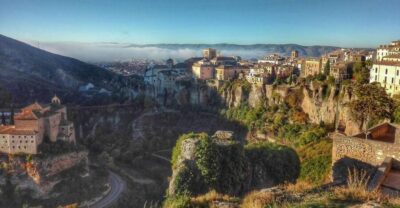
Excursion to Enchanted City and Ventano del Diablo
Read our review →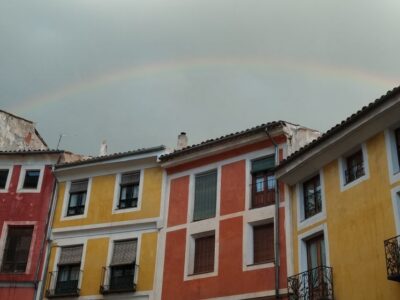
Browse the lists this tour appears in